The Biggest Mistakes You Make When Using an Instant Read Thermometer
Posted by
zevinavavisu@gmail.com
An instant-read thermometer is an absolute must-have in every kitchen. Knowing how to use it, however, is even more important.
There are many mistakes people make when using a digital thermometer.
Being aware of these and knowing how to properly use your digital food thermometer is of utmost importance to keep you and your loved ones safe and healthy.
This article will dive deep into the 6 common mistakes people make when using an instant-read thermometer, along with solutions for each.
Mistake 1: Using an infrared thermometer to test internal temperature
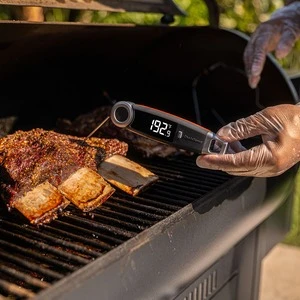
Infrared thermometers are designed to measure the surface temperature of foods and liquids. Using them to check food’s internal temperature will not work and will lead to inaccurate readings, since the surface temperature often differs from the internal temperature for most foods. The best way to check a food’s internal temperature is using a probe thermometer. The probe penetrates the temperature layers and gets to the thermal centre of the food, giving you an accurate measure of the food’s internal temperature. https://www.chefstemp.com/wp-content/uploads/2022/03/ChefsTemp-The-Biggest-Mistakes-You-Make-When-Using-an-Instant-Read-Thermometer-4-300×200.jpgMistake 2: Not using the instant-read thermometer correctly when temping non-solid foods
https://www.chefstemp.com/wp-content/uploads/2022/03/ChefsTemp-The-Biggest-Mistakes-You-Make-When-Using-an-Instant-Read-Thermometer-1-300×300.jpg There are different layers of temperature. They are called gradients of temperature. These temperature gradients exist in ovens, fridges, coolers and foods, especially liquids and semi-liquids. When cooking soup, for example, you’ll notice that it cooks faster from the bottom and the middle than the top. When cooling, however, the exact opposite happens: the top cools faster than the middle and the bottom of the soup. Merely sticking a probe into the soup without accounting for these gradients will give you a false temperature reading. Here are a few tips to help you take correct and accurate readings when temping non-solid foods:- Stir thoroughly to even out the temperature of the food
- Guide the probe to the centre of the food
- Make sure it doesn’t touch the bottom of the pot
- Finally, temp the food. The safe internal temperature for soup is 165°F (74°C).
Mistake 3: Failing to use the thermometer properly when temping solid foods
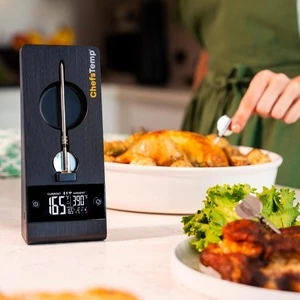
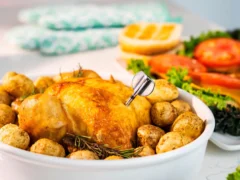
While it is relatively easy to find the thermal centre of liquid and semi-liquid foods, it is a little tricky with solid foods, especially chicken. Chicken cooks at different internal temperatures. For example, chicken breasts cook at a lower temperature compared to thighs and drumsticks. That’s why cooking both dark and white meat to a safe temperature is crucial to ensure the whole bird is safe to eat. Here is how to properly temp a whole chicken:- Find the thickest part of the breast.
- Tilt the thermometer probe slightly and stick it in.
- Make sure the probe doesn’t touch the bones.
- Take the measurement. The thermometer should read 165°F(74°C).
- For thighs and drumsticks, do the same thing. These should be cooked to an internal temperature of 175°F (79°C).
Mistake 4: Not using an accurate digital thermometer
Using an inaccurate instant-read thermometer is a common mistake. To test how accurate a digital thermometer is, people often use the famous ice bath method. While this is an effective way to check how accurate your digital food thermometer is, it is easy to do incorrectly. Simply inserting your thermometer probe into a cup or container filled with water and ice won’t give you a correct reading. Follow these tips to go about preparing an ice bath for a correct and accurate temperature check:- Fill a wide and tall glass with ice.
- Add cold water.
- Stir thoroughly and let rest for 1 to 2 minutes.
- Insert your thermometer probe into the glass.
- Make sure it doesn’t touch the sides or the bottom of the glass.
- Check the reading. The thermometer should read 32°F(0°C).