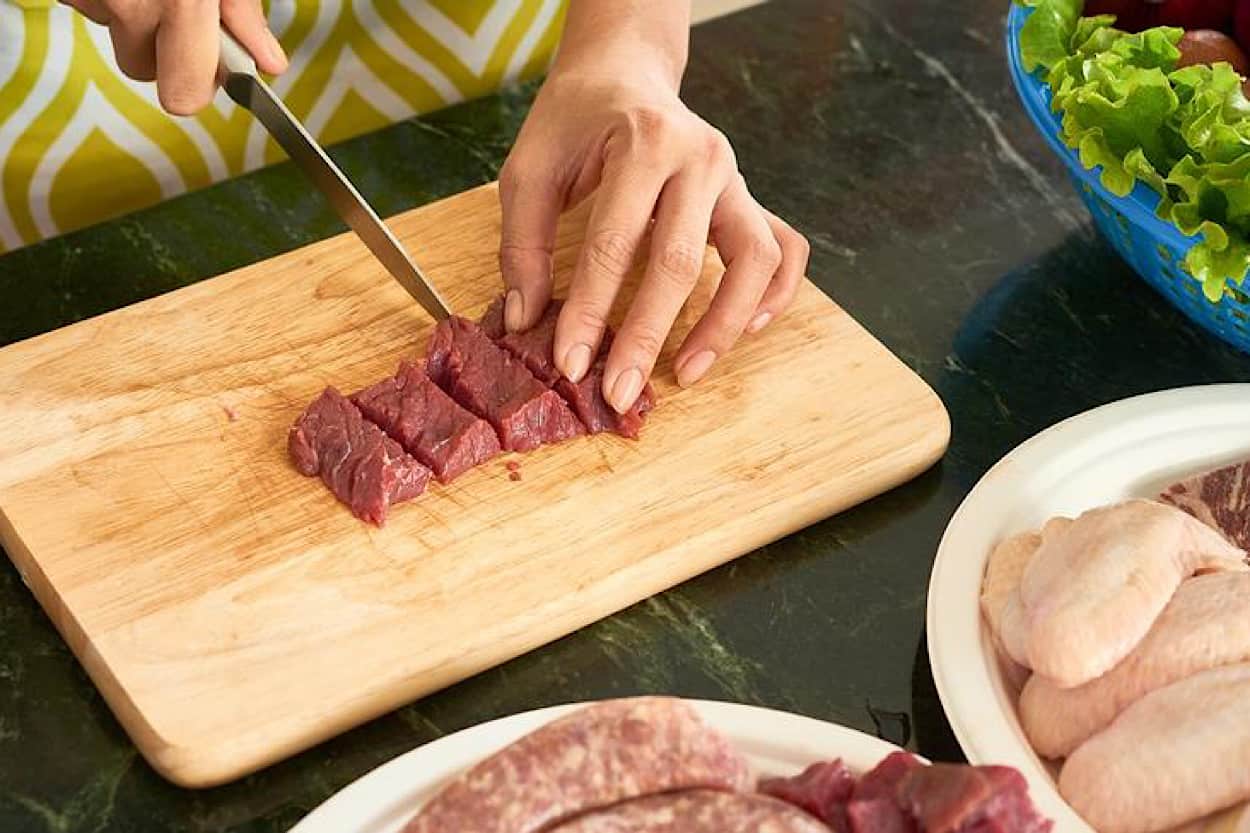
Understanding food safety temperatures is crucial to protecting you and those around you from foodborne illness. Some foods favor bacterial growth and require strict temperature control. Examples of these are meat, poultry, eggs, seafood, dairy products, cut melon, raw seed sprouts, garlic-in-oil mixtures, cooked rice and potatoes. Toxins are poisons produced by bacteria that can cause food borne illness. Some toxins may not be destroyed by boiling. To ensure your food is cooked to a safe temperature, review the Food Safety Critical Temperatures diagram below.
Download
….
https://www.chefstemp.com/wp-content/uploads/2021/11/food-safety-158×300.jpg
FOOD SAFETY CRITICAL TEMPERATURES
| 212 F Water Boils Boiling point varies depending on elevation. Find out the correct on elevation.Find out the correct temperature for your location. | 195 F Ideal internal temperature pork ribs, pork shoulder, beef brisket ribs, pork shoulder, beef brisket |
|---|---|
| 165 F Minimum internal temperature for Minimum internal temperature for poultry, casseroles and leftovers (USDA) The longer the internal temperature of food The longerthe internal temperature of food is heated above 165°F, the more bacteria is heated above 165°F, the more bacteria you will kill. | 160 F Minimum internal temperature for Minimum internal temperature for ground meat, eggs (USDA) ground meat, eggs (USDA) – E.Coll begins to die |
| 158 F Vegetable Starches Gelatinize | 155 F-160 F Steak Well Done |
| 154 F Collagen Denatures | 145 F-155 F Steak Medium Well |
| 145 F Minimum internal temperature for Minimum internal temperature for seafood, pork, beef, veal, lamb (USDA) | 144 F Eggs begin to set |
| 140 F Hot Holding Temperature Hot Holding Temperature Hot Holding Temperature | 137 F Trichinella begins to die (found in pork) |
| 135 F-145 F Steak Medium | 132 F C. Perfringeus begins to die (found in raw meat, poultry) |
| 131 F B. Cereus begins to die (found in soil) | 130 F-135 F Steak Medium Rare |
| 120 F-130 F Steak Rare | 117 F Salmonella begins to die Salmonella begins to die (found in eggs, dairy) |
| 113 F Listeria begins to die (found in ready Listeria begins to die (found in ready -to-eat meats, dairy, sprouts, soft -to-eat meats, dairy, sprouts, soft cheeses) | 70 F At room temperature bacteria growth can double every 20 minutes. |
| 41 F-135 F Bacteria grow most quickly between 70°F – 125°F | 40 F Cold Holding |
| 32 F Water Freezes While bacteria stop multiplying at 32°F, While bacteria stop multiplying at 32°F, they do not die. | 0 F Freezer Storage |