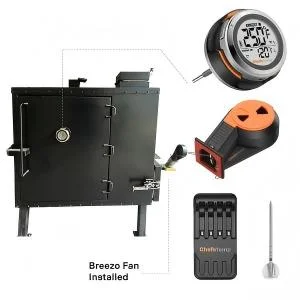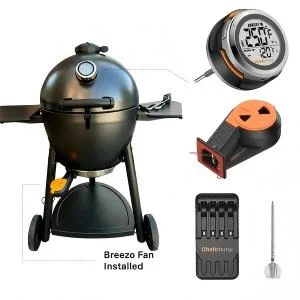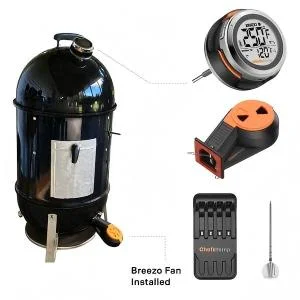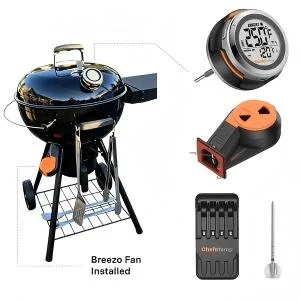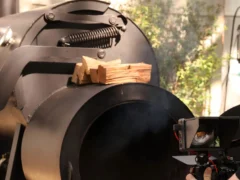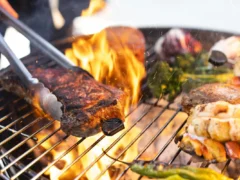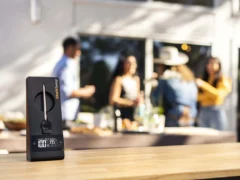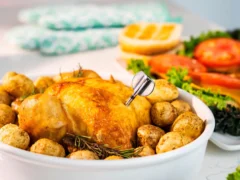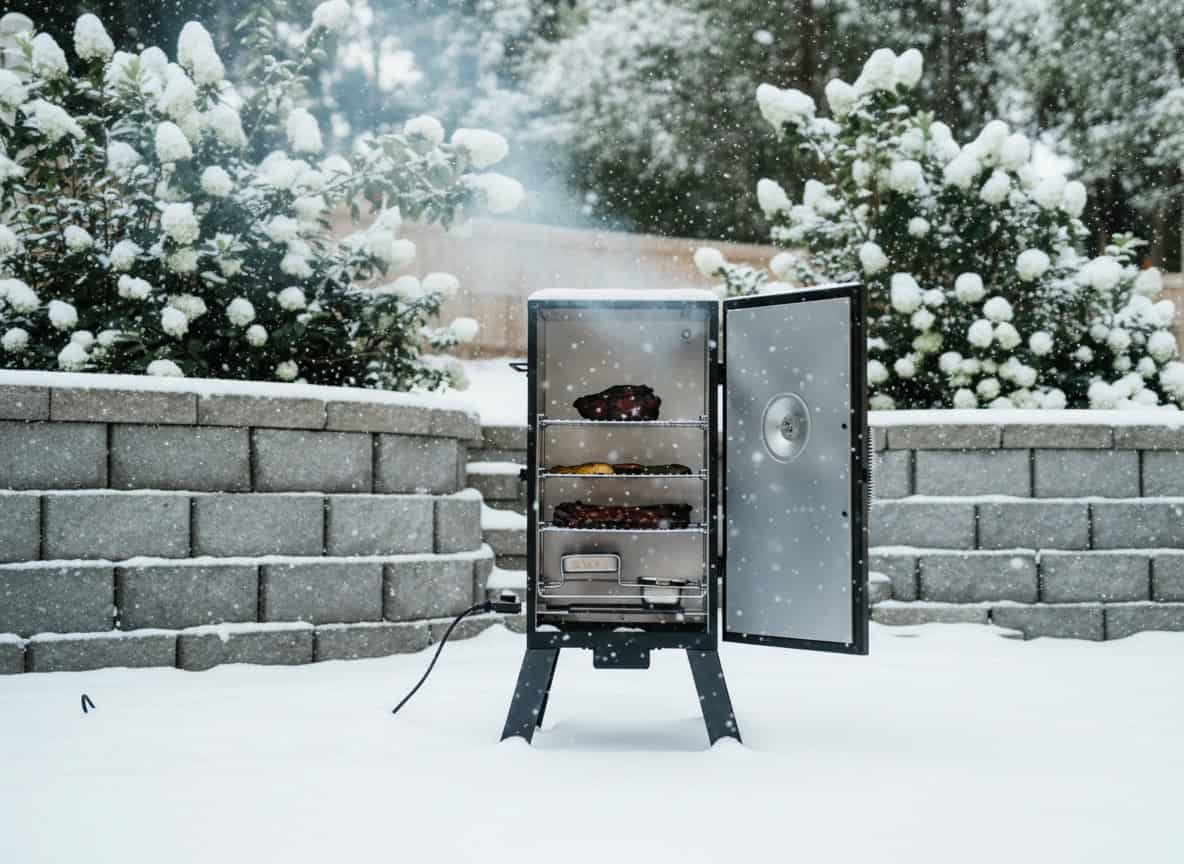
Vertical water smokers, such as the Weber Smoky Mountain (WSM), are prized for their portability and efficiency. Manual damper adjustments render analogue units vulnerable to environmental factors — particularly wind and subzero temperatures. For enthusiasts hoping to transform these analogue machines into “set and forget” machines, digital temperature control systems offer the perfect professional solution.
This guide details the technical process for upgrading a vertical smoker for extreme conditions, using forced-induction fans and wireless monitoring to ensure consistent results.

Part 1. Technical Concerns in Portable Vertical Smokers
Vertical smokers feature multiple pieces for transport (tailgating), but they pose two main engineering challenges.- Ambient Sensitivity: With only minimal insulation from porcelain-enamelled steel, cold weather causes this unit to quickly lose heat, forcing the fire to burn harder and potentially depleting fuel prematurely.
- Manual Airflow Management: Traditional fire management requires constant manual adjustment of bottom dampers to maintain a steady temperature range of 225°F to 275°F. External wind can “force” air into these vents, causing uncontrollable temperature spikes.
Part 2. Hardware Integration for Forced Induction Motor and Digital Gauges
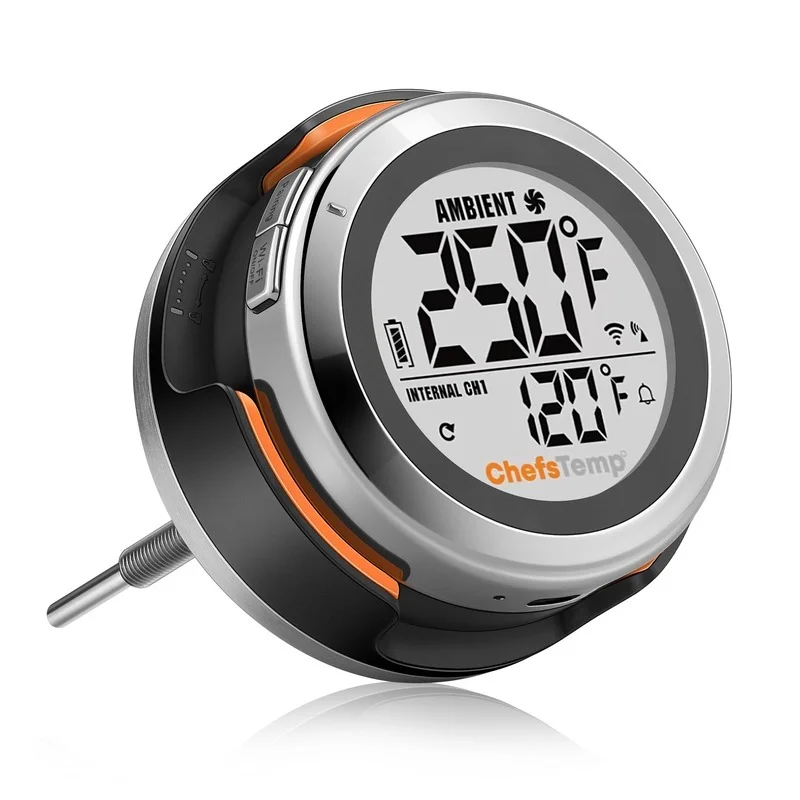
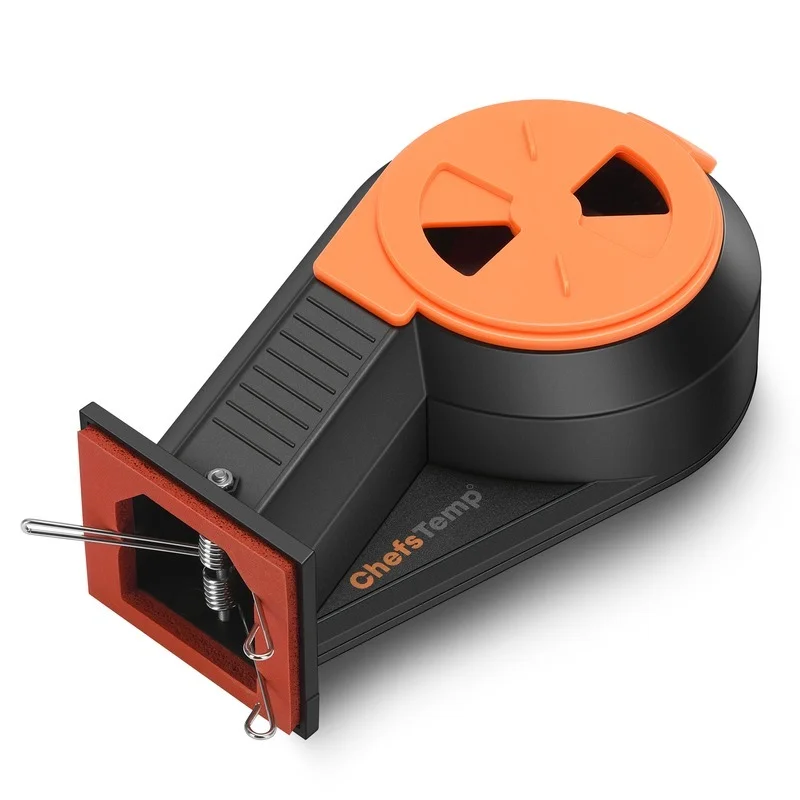
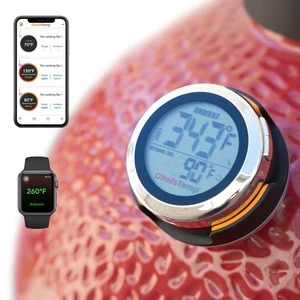
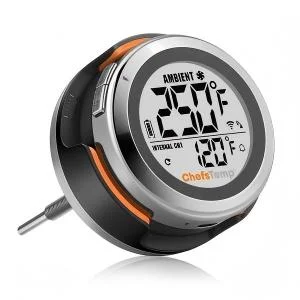
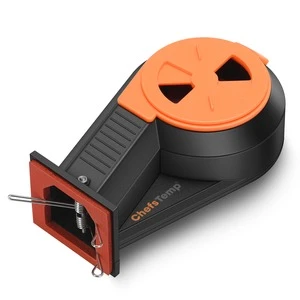
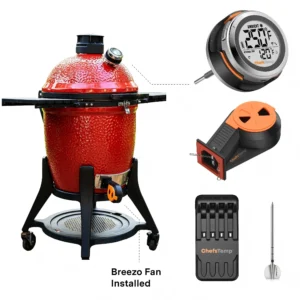
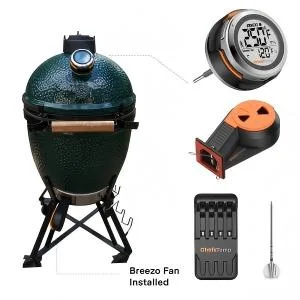
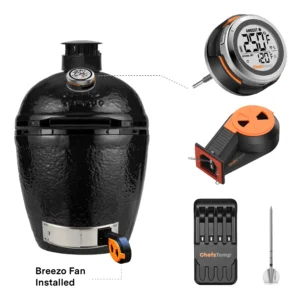
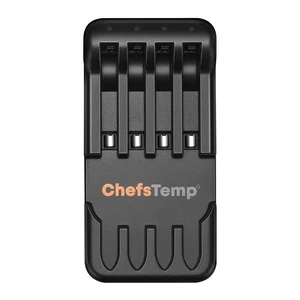
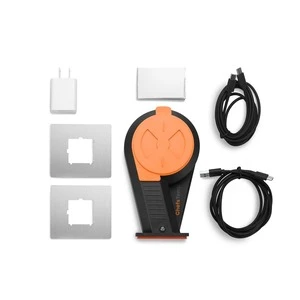
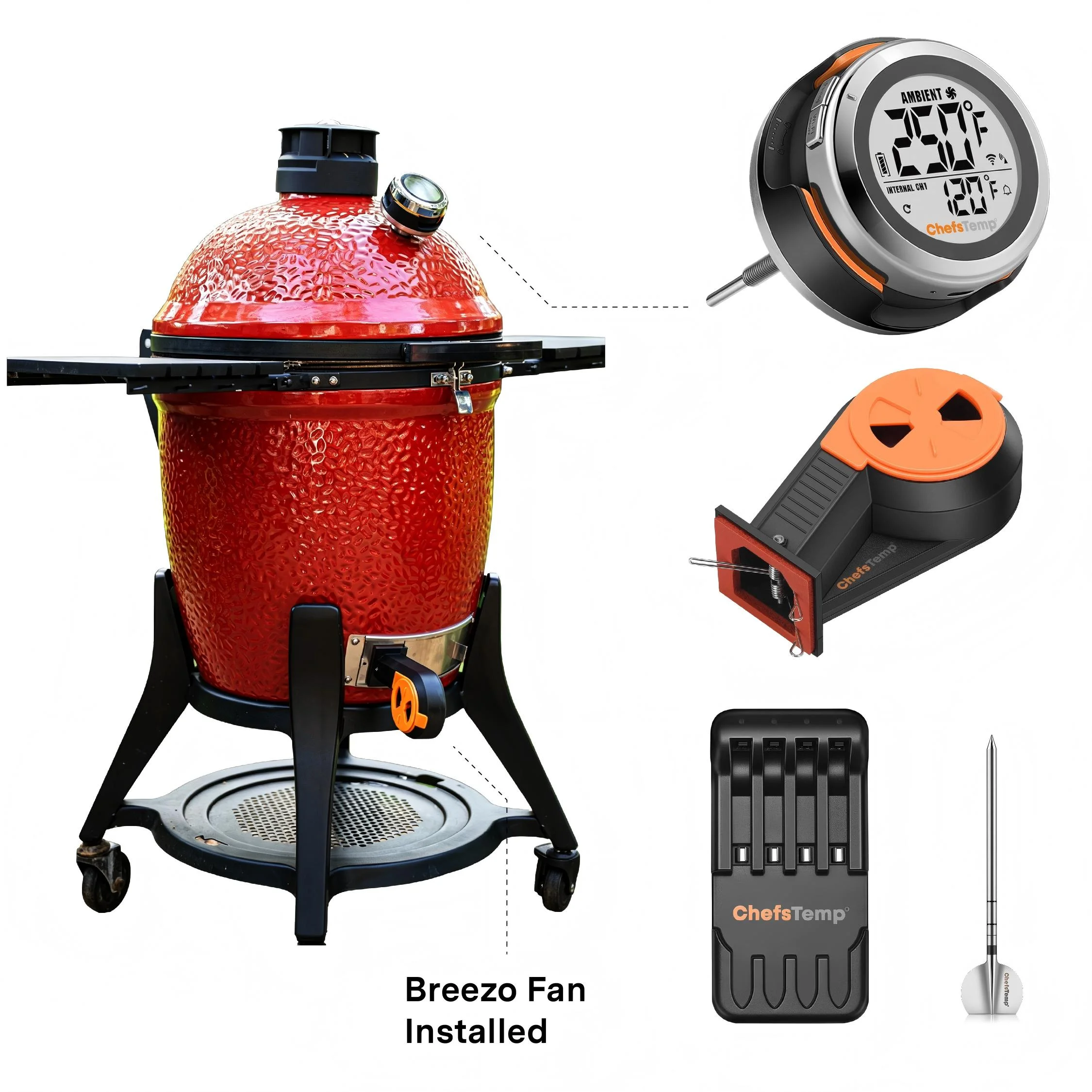
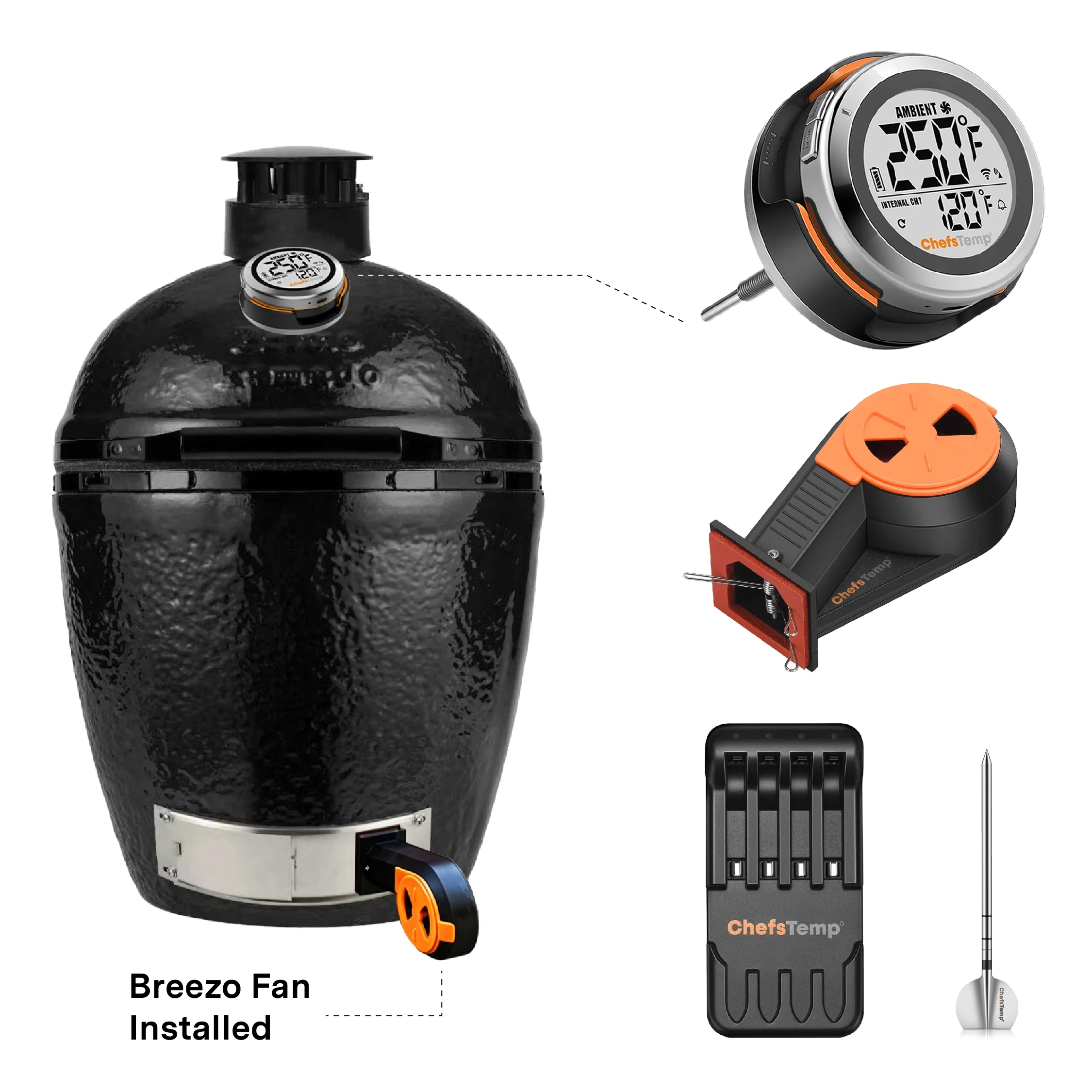
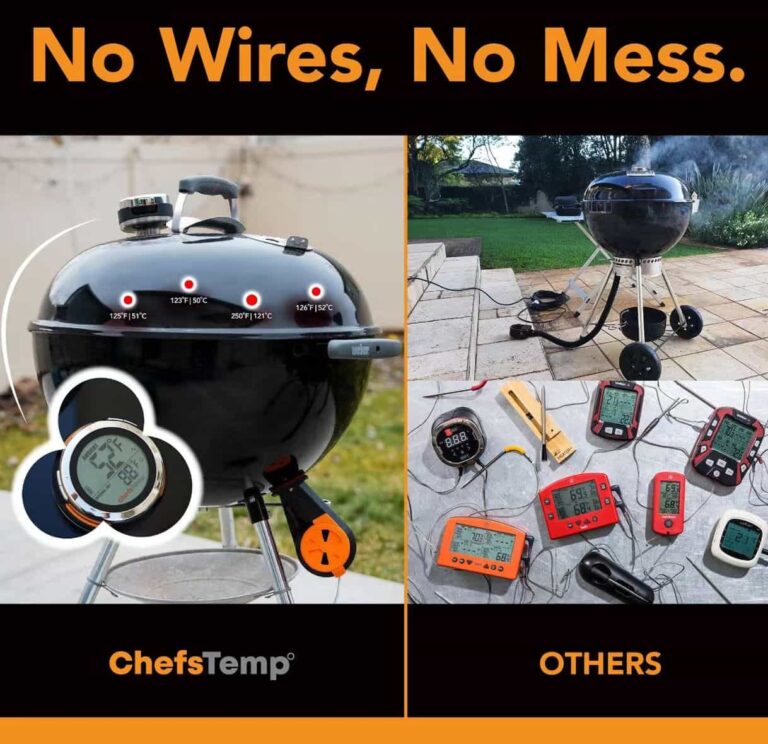
To eliminate manual intervention, a forced-induction system like ChefTemp Breezo must be implemented to centralise airflow control. Installation Steps: Step 1. Unscrewing the Stock Damper: Detach one of the bottom circular vents, which serves as the blower fan’s primary air intake. Step 2. Seal Secondary Intakes: Use high-temperature duct tape to secure all additional bottom vents so that 100% of the oxygen entering the firebox is managed by its digital algorithm and fan system. This step ensures 100% control. Step 3. Installing the Mounting Clip: High-tension spring clips are utilised to secure the fan housing to the smoker’s intake hole, creating an airtight seal. Step 4. Replacing the Analogue Dome Gauge: Factory thermometers often fail in cold weather or provide inaccurate “top-of-dome” readings. Replace the stock gauge with a digital system (such as the ProTemp S1) that monitors both the internal environment and provides connectivity to wireless probes.
Part 3. Power Management in “Off-Grid” Environments
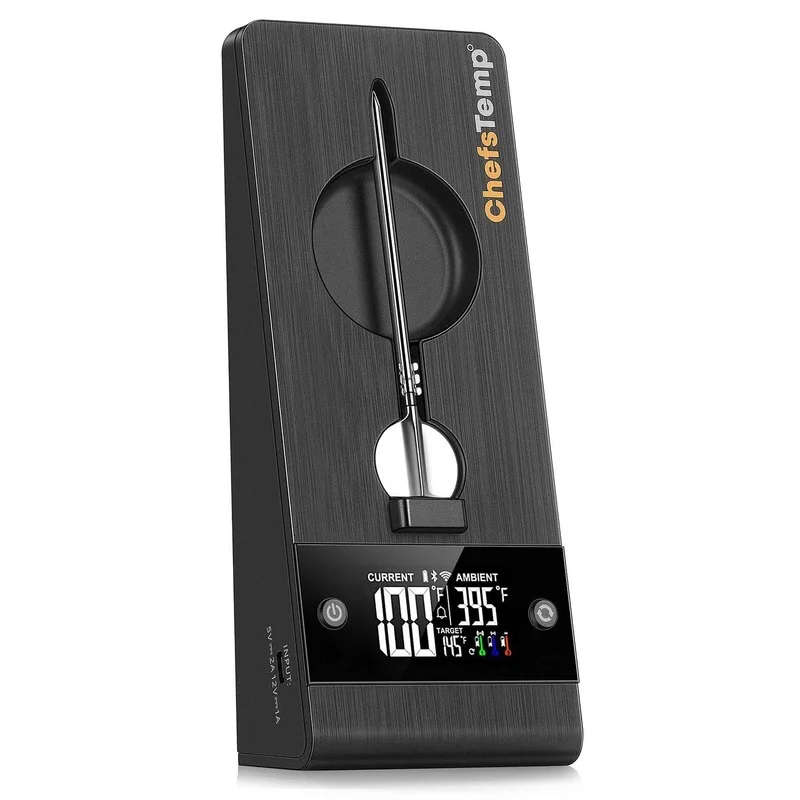
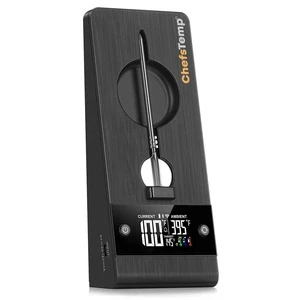
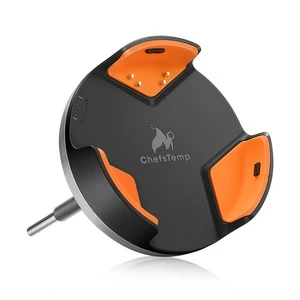
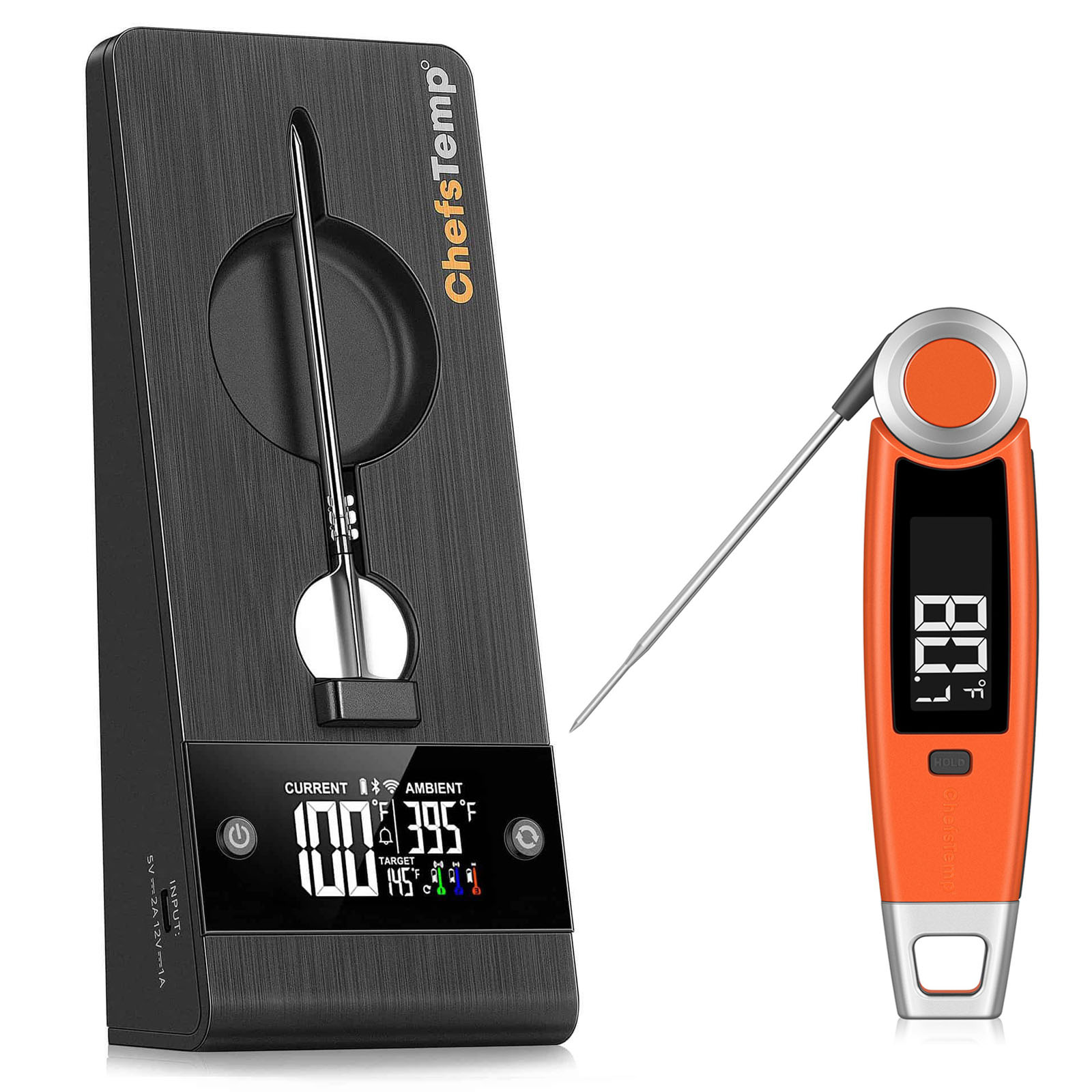
Tailgating often means cooking without access to standard AC outlets.- Battery Power Solutions: Systems should be powered by a dedicated portable power base (e.g., ProTemp 2 Plus).
- The Cold Weather Factor: It is important to note that battery efficiency drops significantly in freezing temperatures. In 0°Fconditions, battery life may be reduced by up to 50%. Always have a secondary USBC power source or an external power bank as a fail-safe to prevent the fan from shutting down mid-cook.
Part 4. Fire Preparation for Long-Duration Cooks
For vertical smokers, the Minion Method or the use of a Vortex Basket is recommended for sustained heat:- The Fuel Base: Fill the charcoal basket with high-quality lump charcoal or briquettes. Place unlit smoking wood chunks at the bottom for a gradual release of smoke.
- Ignition: Use a high-output torch (e.g., GrillBlazer) to ignite the centre of the coals. Once the core reaches an ashed-over state, the fan system can take over to bring the unit to the target temperature.
- The Set Point: For pork roasts or briskets, a set point of 270°Fprovides an ideal balance between rendering fat and maintaining a manageable cook time.
Part 5. Advanced Wireless Monitoring and Internal Temps
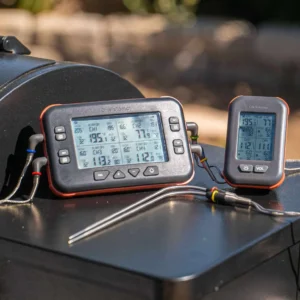
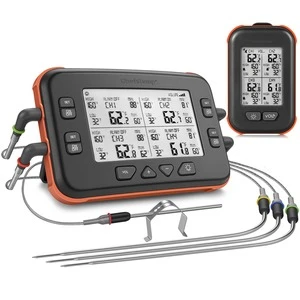
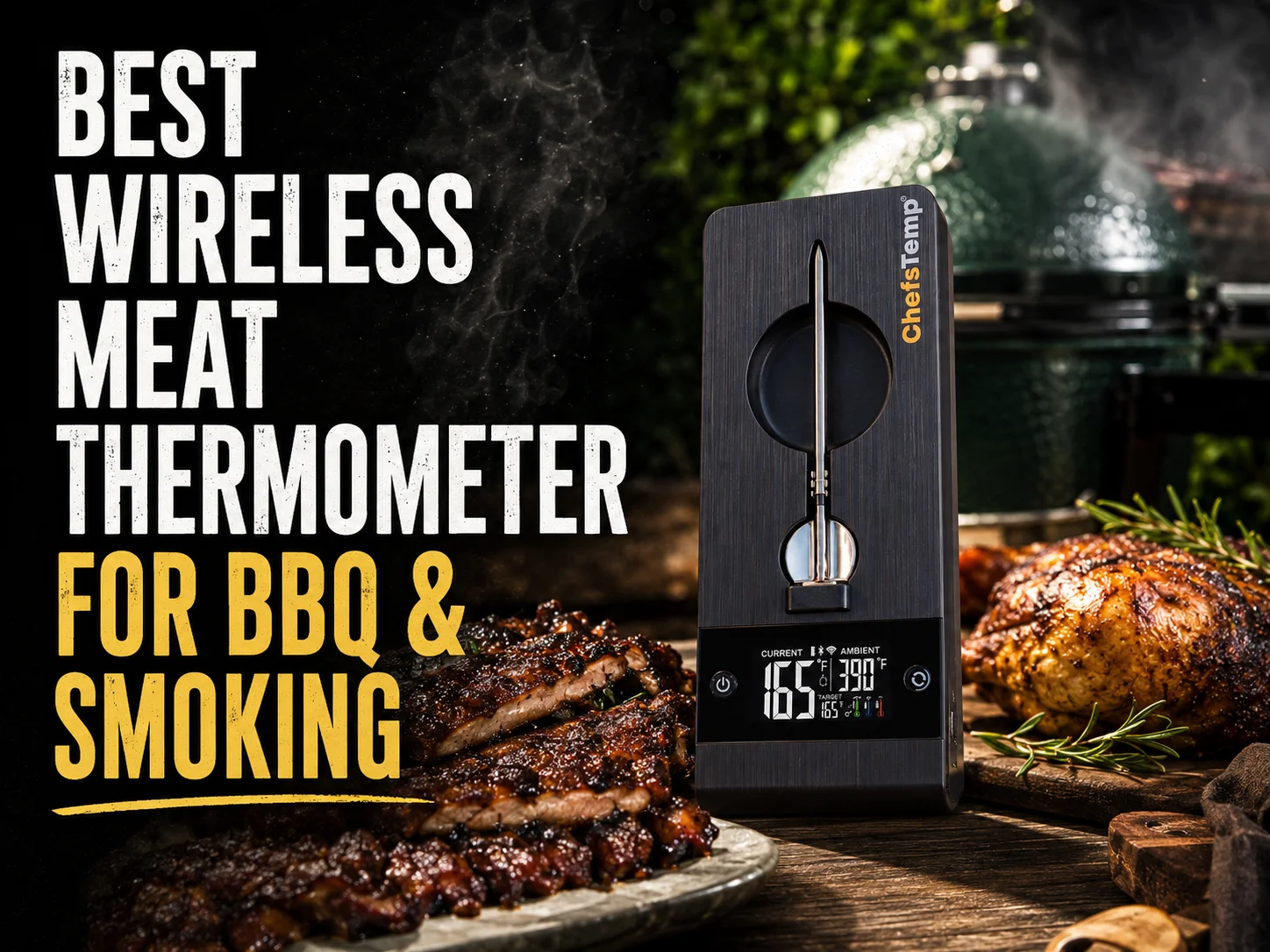
Modern barbecue relies on “feel” and data rather than strict time-based schedules.- The Best Meat Thermometer Standards: Industry standards require an accuracy of ±5°F. Wireless probes (Bluetooth/Wi-Fi) are essential for monitoring “thermal stall” without opening the lid.
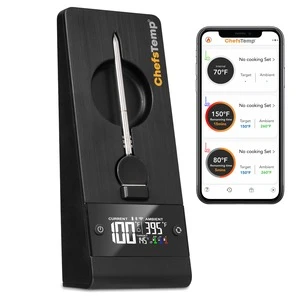
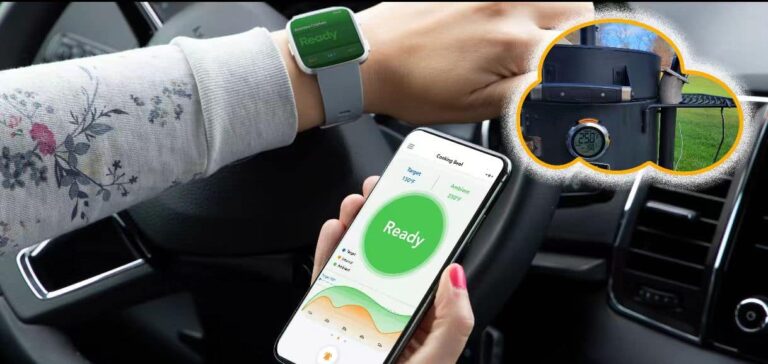
- Wi-Fi Sync Benefits: Utilising a Wi-Fi-enabled system allows the operator to monitor the pit from a distance (e.g., inside a stadium or a vehicle) and receive real-time alerts if the firebox runs out of fuel or the battery gets low.
- Dual-Point Monitoring: Always monitor both the ambient grate temperature and the internal meat temperature. This dual-data point is the only way to accurately predict the finish time.
Part 6. Managing the Cook: The Foil Boat and Resting
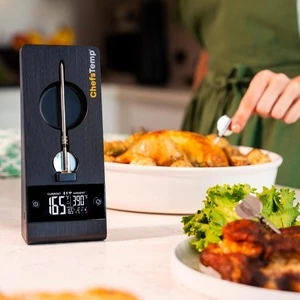
When cooking cuts like pork loin or shoulder in high-airflow environments:- The Foil Boat Technique: At an internal temperature of 165°F, transfer the meat into a foil boat. Unlike a full wrap, the “boat” protects the bottom of the meat in its own rendered fats while leaving the top exposed to maintain the integrity of the bark.
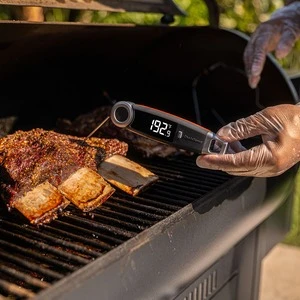
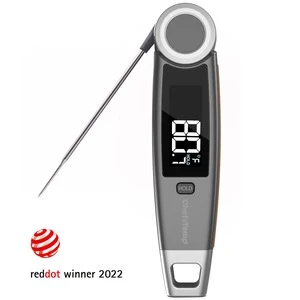
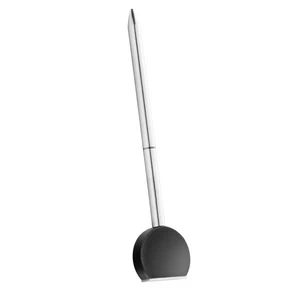
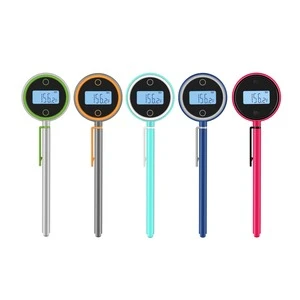
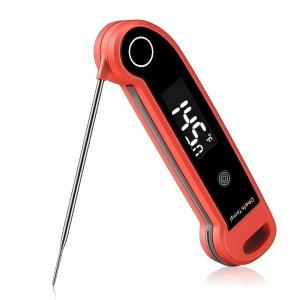
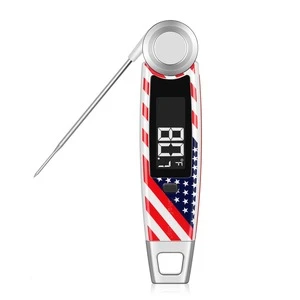
- The “Butter” Test: Do not pull meat based solely on temperature. Use an instant-read probe to check for “probe tenderness”—the sensation of the needle sliding into room-temperature butter. This typically occurs between 203°F and 207°F.
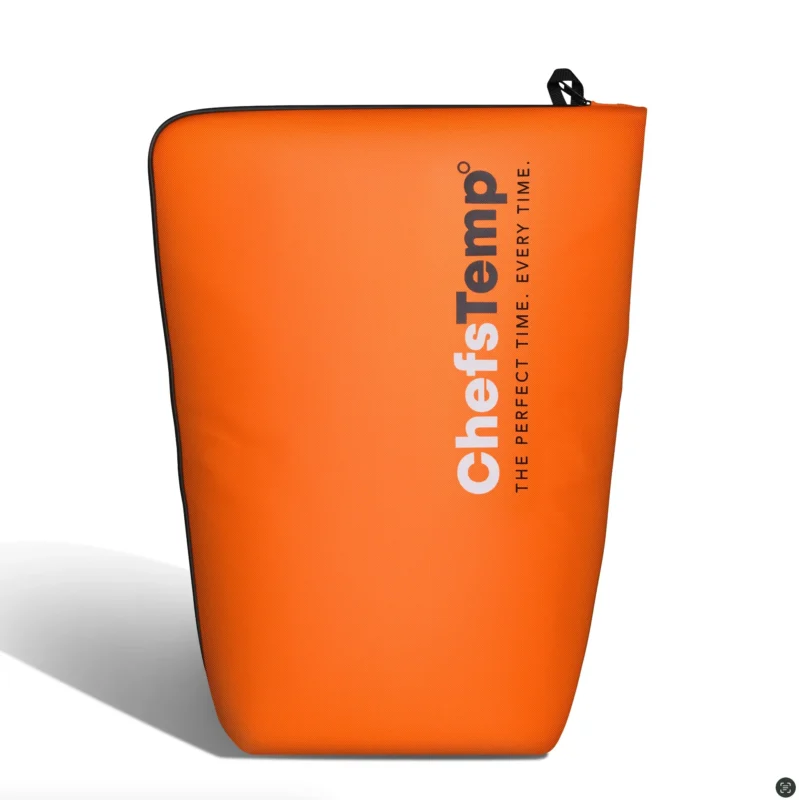
- The Hot Hold: A proper rest is mandatory. Placing the meat in a 150°F oven or a well-insulated cooler for at least 2 hours allows the fibres to relax and reabsorb juices.
Professional Conclusion: Efficiency vs. Flavor
The integration of digital fans and wireless monitoring transforms a budget-friendly vertical smoker into a professional-grade tool. This setup offers the flavour profile of a real wood/charcoal fire with the convenience of a pellet grill. By removing the stress of fire management, the pitmaster can focus on the nuances of seasoning and meat selection, ensuring high-quality results regardless of external weather conditions.RELATED POSTS
CHEF IQ Alternative: Is ChefsTemp the Best Thermometer for Smoker Cooking?
The chef iq thermometer has earned a solid reputation in modern kitchens. For indoor roasting, air frying, or ...
Best Meater Pro Alternatives in 2026: Finding the Best Wireless Meat Thermometer for Smoker
Meater Pro revolutionized wire-free cooking, but heavy-duty steel offsets and thick ceramic kamados create phy...
Finding the Best Smart Wireless Meat Thermometer: The Ultimate ThermoWorks RFX Alternative
It takes time, money and accuracy to prepare a top-notch brisket for a weekend BBQ party. However, that enthus...
Beyond PitmasterIQ: Transforming Weber Grill Temperature Control with an All-in-One Monitoring Hub
Brisket purveyors have a reputation for waking up in the middle of the night to check the temperature of smoki...
The Ultimate Smart Grilling Hub: A Modern Alternative to BBQ Guru for 2026
I still recall the stress from my first overnight brisket. It wasn't the charcoal that kept me up. It was the ...
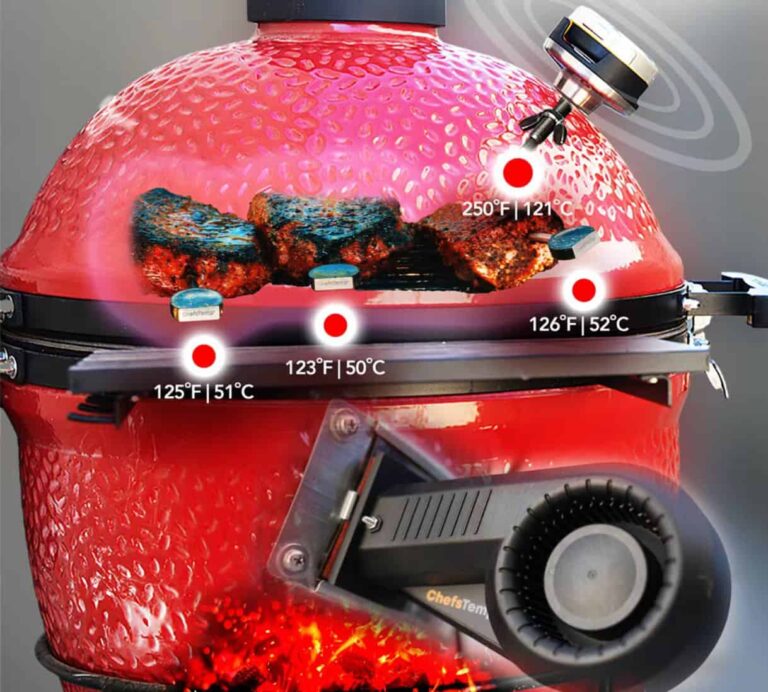
Master Your Kamado Joe Temperature Control: The Ultimate SMOBOT Alternative
A well-insulated grill with high-end ceramic insulation is great. But let's face it: monitoring grill vents fo...
The Rest Is Part of the Cook
"Using time, temperature, and even your grill to protect the final result."
Most of us spend a lot of time th...
Pitmaster IQ Alternatives: Best Smart Wireless BBQ Controls Guide
Compare the top Pitmaster IQ alternatives. Learn about smart wireless smoker controllers that control airflow and heat for perfect meals year-round.
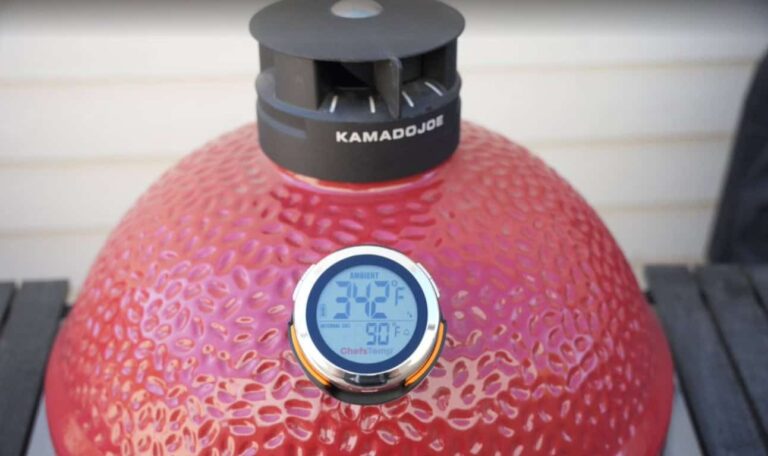
Kamado Grill Accessories: The Ultimate Guide to Building a Smart Ecosystem
Heavy-duty ceramic grills deliver amazing flavor, but that thick-walled grill is a challenge to master. If you...
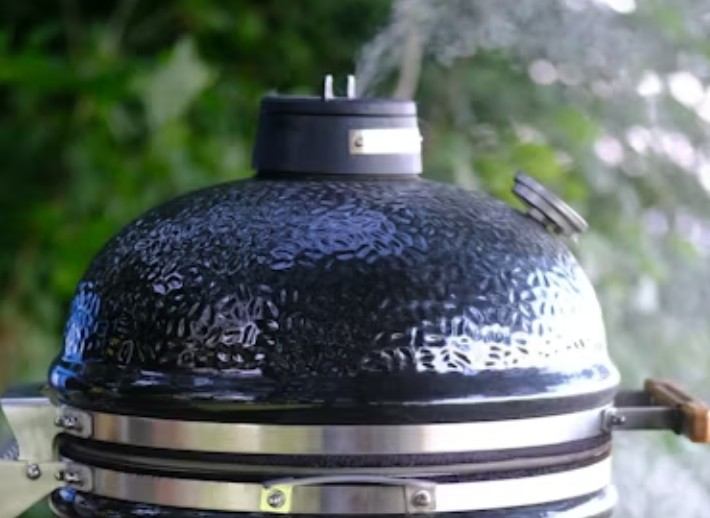
SMOBOT Review: Is It Still The Best Kamado WiFi Grill Controller?
SMOBOT automatically controls your Kamado vent, but jammed gears and weak WiFi can cost entire cooks. Here is what to know before you buy.
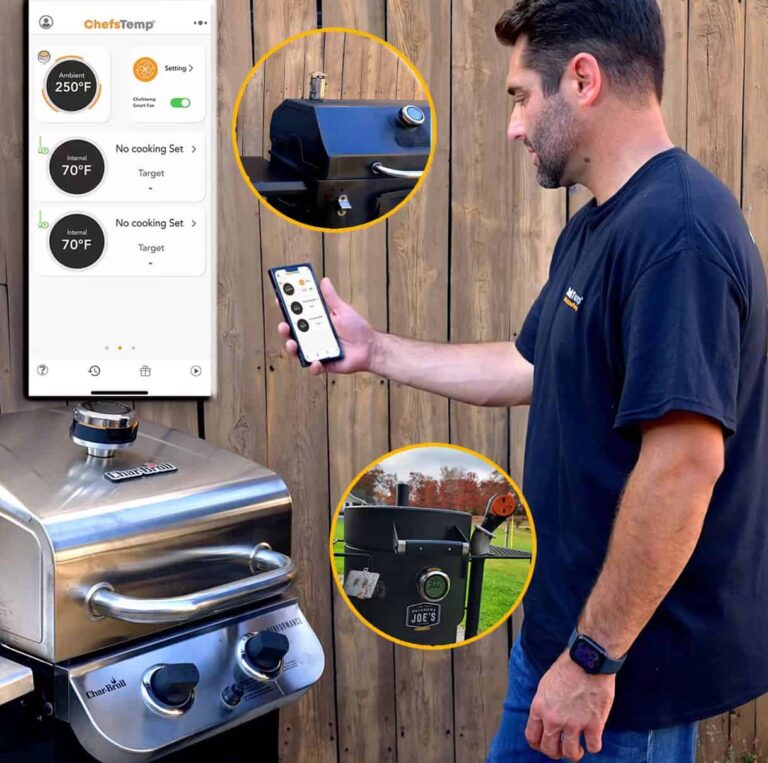
Accessories for BBQ Grill: Brand-Agnostic Compatibility & Tech Integration
Let’s be honest: when you look for accessories for bbq grill, another silicone brush won’t fix a ruined briske...
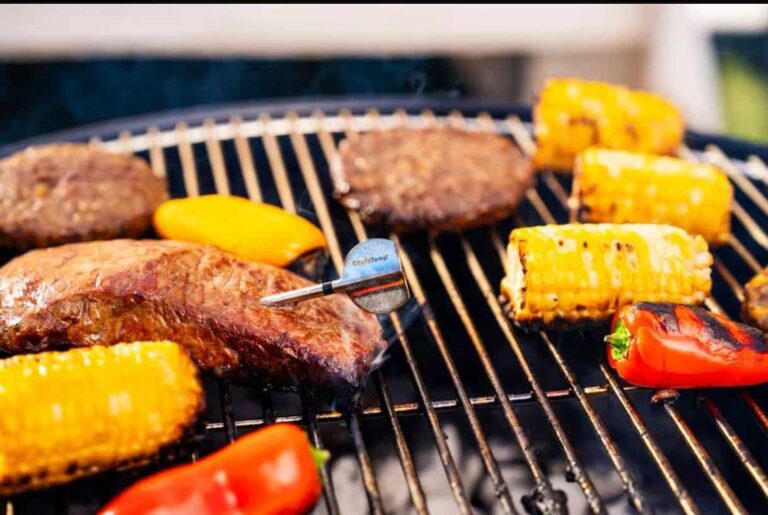
The Best WiFi Meat Thermometer for Smoker: ProTemp Plus (True Wireless) vs. Signals (Wired)
Smoking a brisket requires a full day of commitment. It's not just a “set it and forget it” kind of deal. We'v...