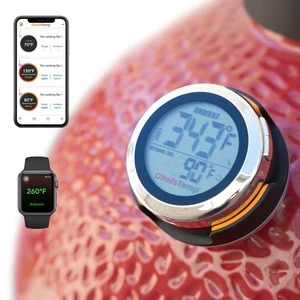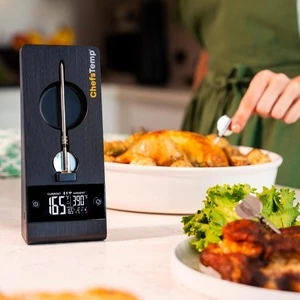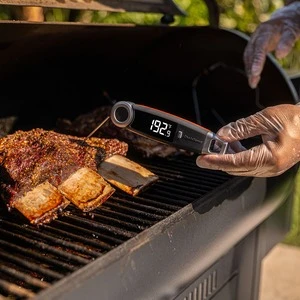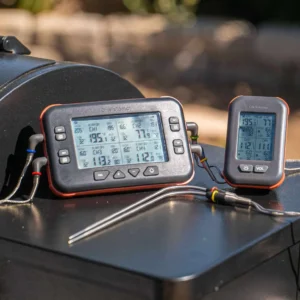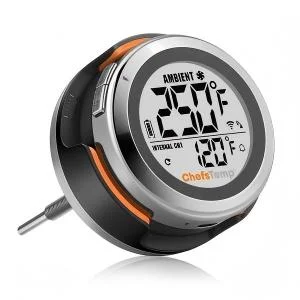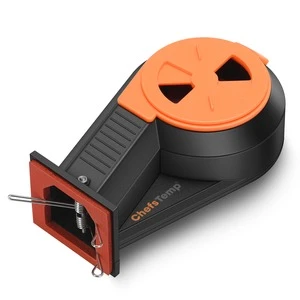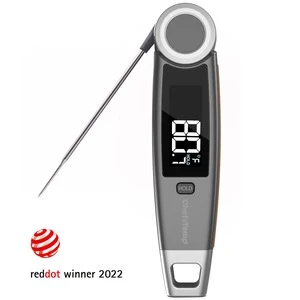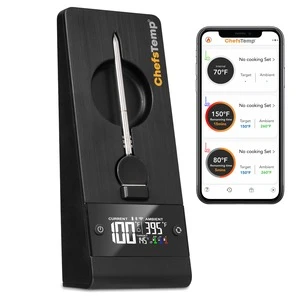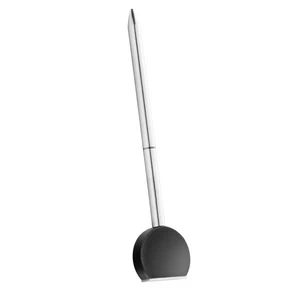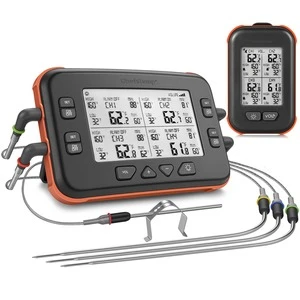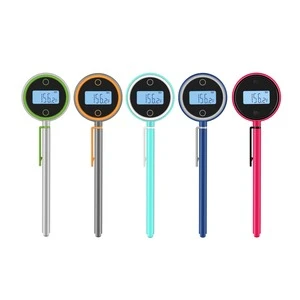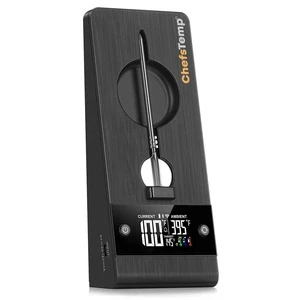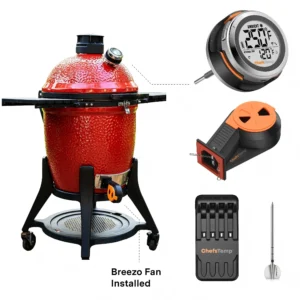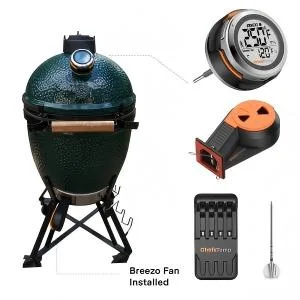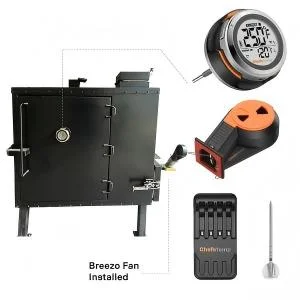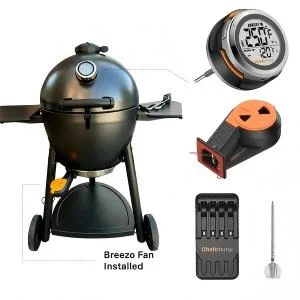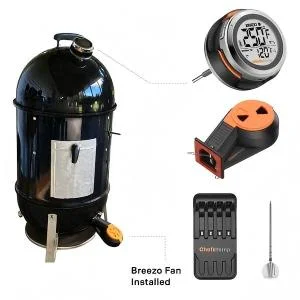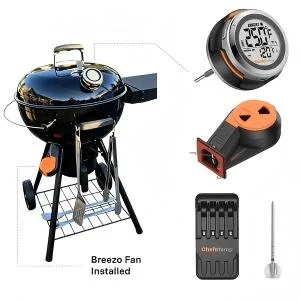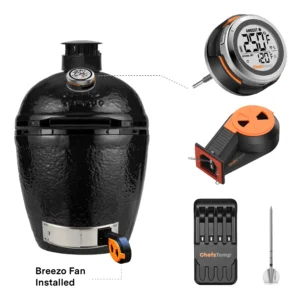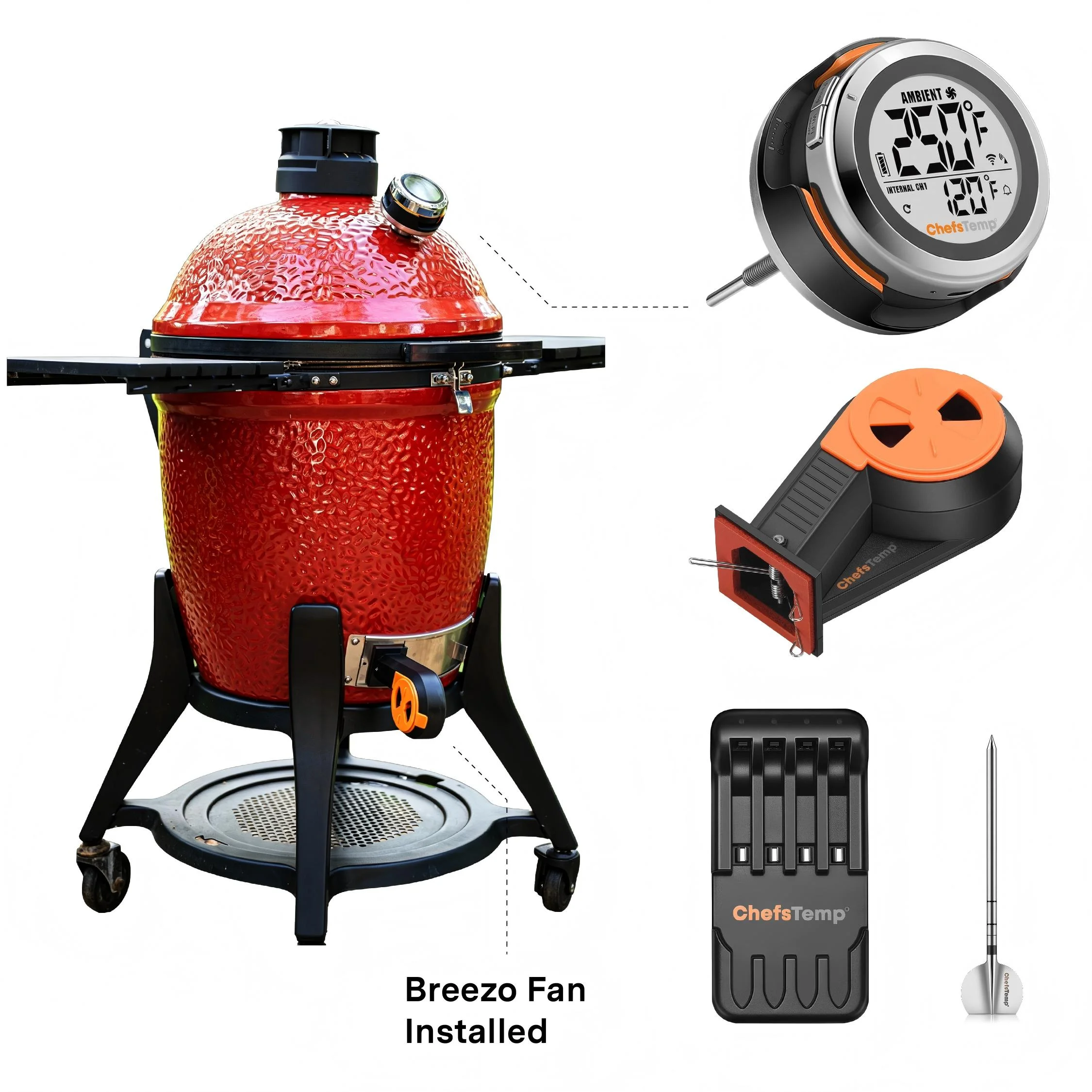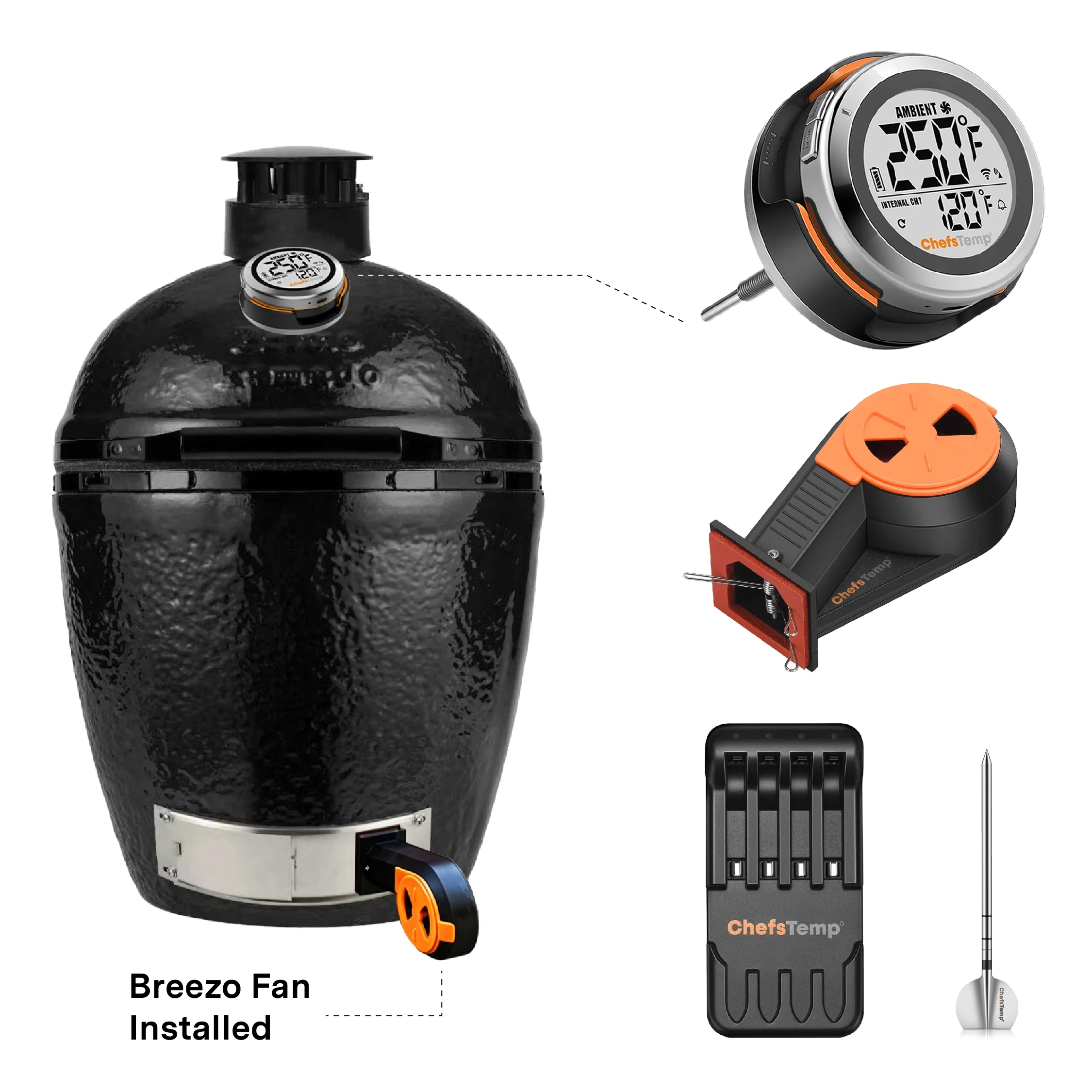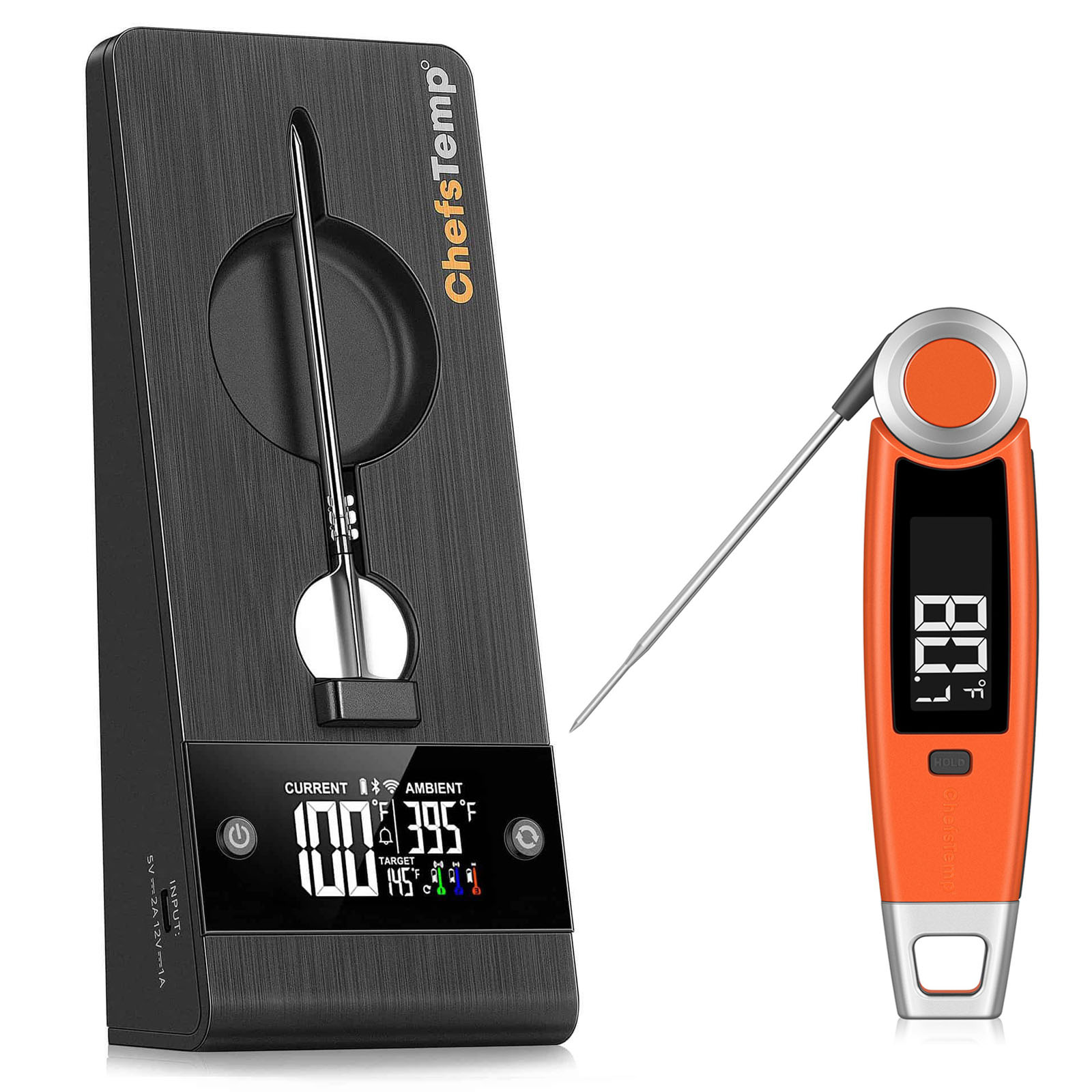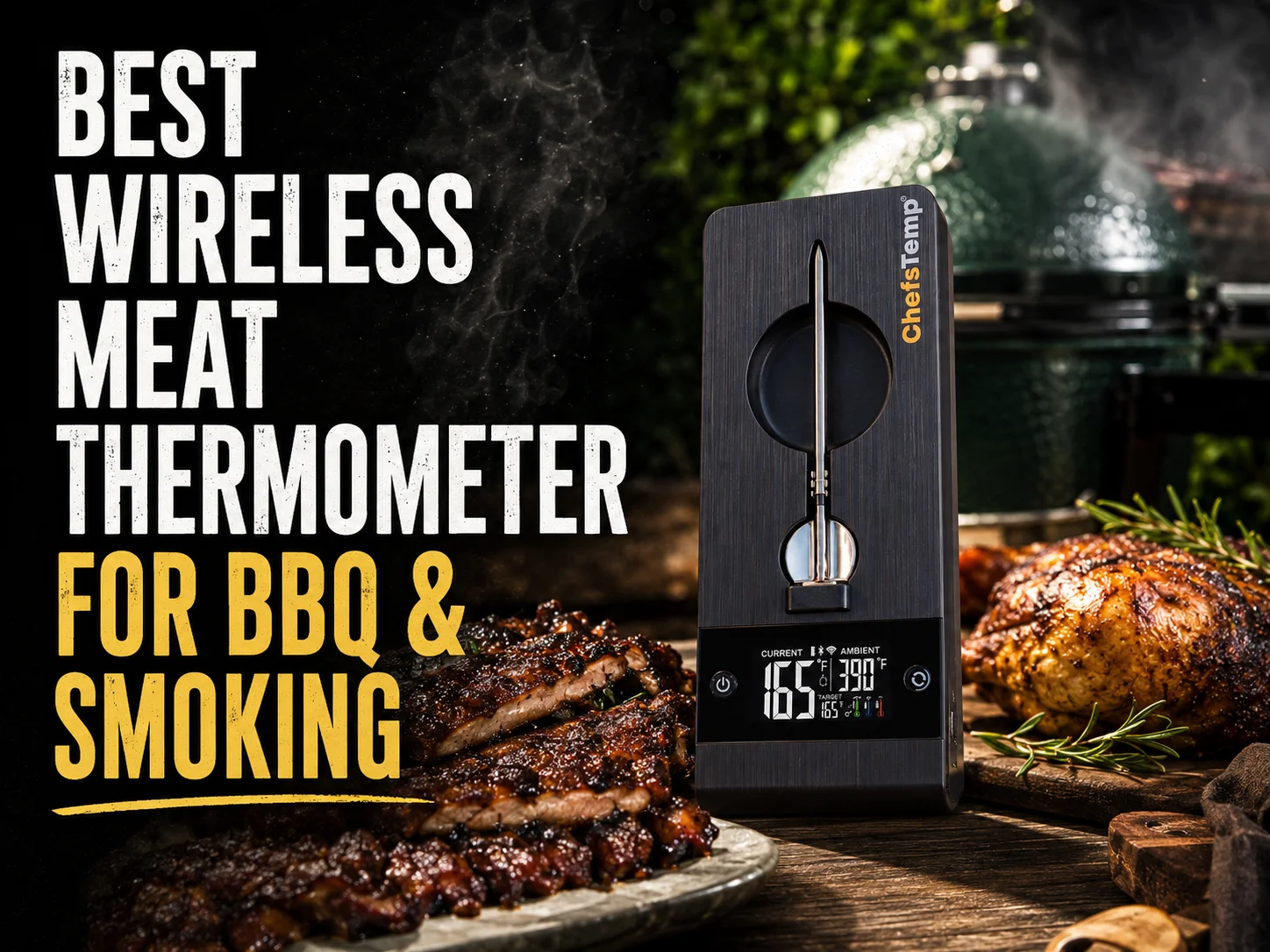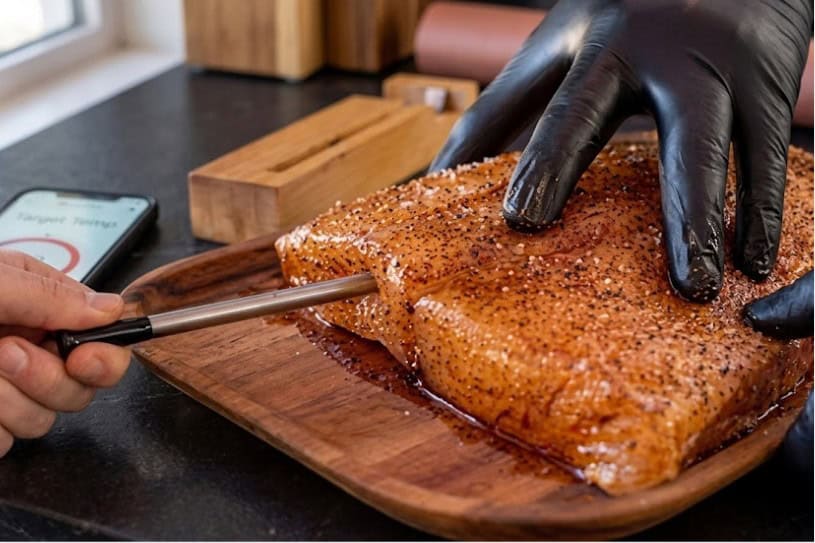
A wireless meat thermometer helps you cook BBQ with precision by monitoring internal temperature in real time without opening the grill. Instead of guessing doneness or losing heat by lifting the lid, you can track your cook directly from your phone. This improves consistency, prevents overcooking, and ensures food safety.
According to the Hearth, Patio & Barbecue Association (HPBA), adoption of smart grilling tools has grown by more than 15% over the past three years, reflecting a broad shift toward data-driven outdoor cooking.
This guide covers how wireless probes work, what specs actually matter, the exact probe placement technique by cut, and an honest comparison of leading models, so you can buy with confidence and cook with precision.
Part 1. What is a Wireless Meat Thermometer?
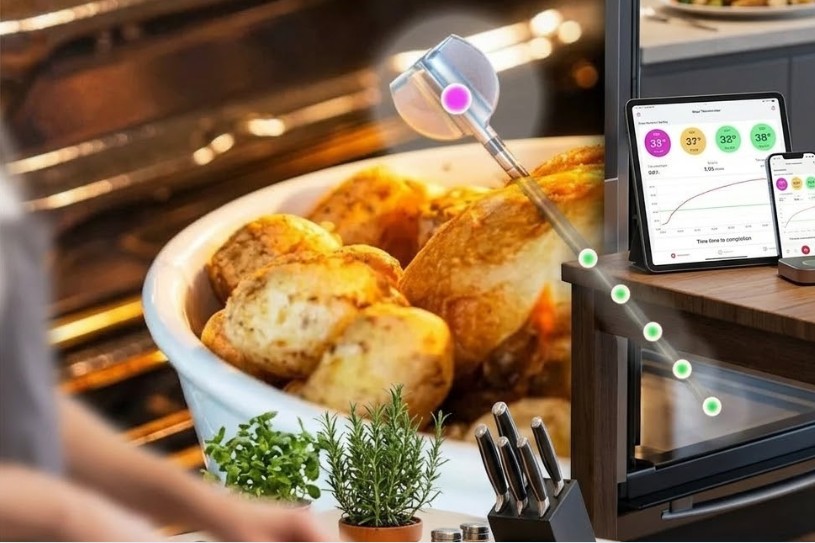
A set-and-forget wireless meat thermometer is a smart cooking device that stays inside your food from start to finish. Unlike instant-read models, it stops you from constantly opening the grill lid. This keeps your heat locked in and speeds up your cooking. You insert the probe once, and it sends live updates straight to your phone.
Unlike instant-read thermometers that require manual checking, a leave-in wireless probe continuously tracks both internal meat temperature and ambient grill heat, providing a complete picture of the cooking process.
These modern cooking tools offer several distinct advantages:
- No trailing cables: True wireless probes eliminate the corded tether that can pinch under a smoker lid seal, compromise the lid’s temperature seal, or create a trip hazard near a hot grill.
- Dual heat tracking: Smart sensors do double duty. The tip measures the exact internal meat temperature. Meanwhile, the top handle tracks the ambient air inside your cooking chamber.
- USDA-verified food safety: The USDA mandates minimum safe internal temperatures: 165°F (74°C) for poultry, 145°F (63°C) for whole pork and beef, and 160°F (71°C) for ground meats. A leave-in probe enforces these targets automatically.
This technology improves cooking consistency and convenience significantly. You achieve the same juicy results for every single meal. Plus, you can finally relax and mingle with your guests while the mobile app carefully monitors the fire for you.
Quick buying checklist:
- Connection: WiFi meat thermometer vs Bluetooth
- Accuracy: ±1°F recommended
- Heat resistance: at least 500°F+
- Battery life: 24+ hours
- Probe thickness: thinner = better juice retention
- App features: alerts, cook prediction, temperature graph
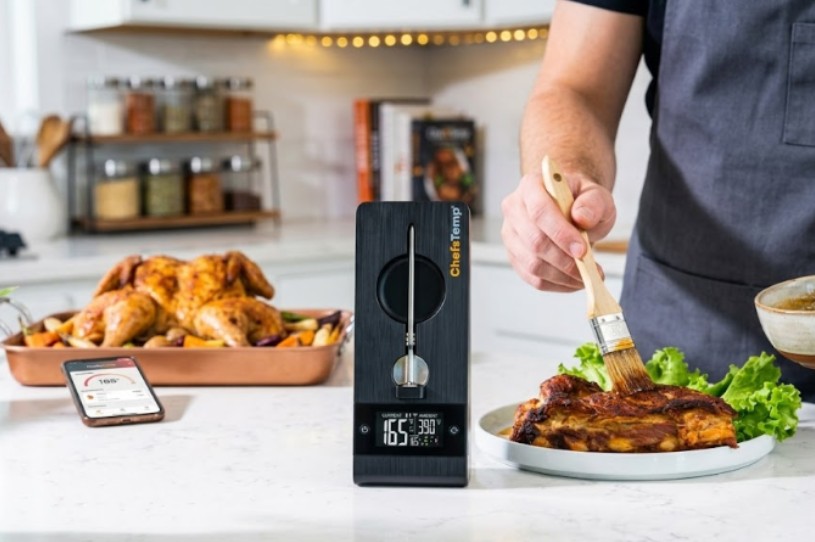
Part 2. How to Choose the Best Meat Thermometer for a Smoker
Not all cooking gadgets deliver reliable results. Before you invest in a new wireless leave-in meat thermometer, you need to check a few vital details. Choosing the appropriate qualities can protect your food and ease the burden of cooking.
Signal Range and Connection Type
The probe and your phone must have a strong connection. Typical Bluetooth devices have a range of 30 to 150 feet. For small patios, this works well. But Bluetooth signals are frequently blocked by thick metal walls in smokers.
Wi-Fi models use a smart base station. The probe connects to the hub next to your grill, and the hub links directly to your home Wi-Fi router. This setup gives you truly unlimited range. You can monitor your brisket’s progress while running errands across town.
Temperature Accuracy
The best thermometer for overnight brisket must provide exact numbers. Therefore, look for sensors that read within 1°F (0.5°C) of the true temperature. Budget probes commonly exhibit a ±5°F–10°F drift after thermal cycling, enough to push a 135°F medium-rare steak past 145°F into well-done territory or to give a false-safe reading on undercooked poultry.
Heat Resistance and Durability
Offset smokers typically operate between 225°F–275°F (107°C–135°C), while direct charcoal or gas grills can spike above 600°F (315°C) at the grate level. Because internal probe components are sensitive, the handle must survive extreme heat.
Premium probes withstand ambient temperatures up to 572°F (300°C). Always verify the maximum heat rating before placing any electronics near an open flame.
Battery Life
Smoking a big pork shoulder often takes 12 to 16 hours. Thus, your wireless meat probe for the smoker needs a battery that easily outlasts your longest recipe. Look for probes offering at least 24 hours of continuous power on a single charge. Furthermore, the base station should have ample backup power.
Probe Thickness
Thick probes leave wider punctures in the meat. While probe holes alone do not cause major moisture loss, a needle-thin tip is significantly less invasive, especially in delicate proteins like fish fillets or chicken breasts, where structure and presentation matter. Thin probes also enable more accurate readings by sitting precisely at the center of the cut.
Smart App Features
Great hardware requires a great smartphone app. A useful app clearly displays your real-time meat internal temperature chart. It also lets you set custom alarms if your fire gets too hot or too cold. Even the smartest apps use specialized algorithms. These tools predict the exact minute your food will finish cooking.
Multi-Probe Support
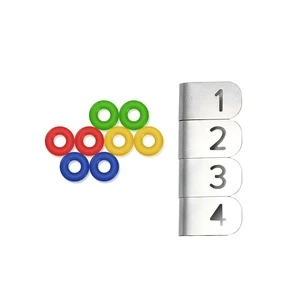
If you regularly cook multiple cuts at once, a brisket alongside ribs, or a whole chicken next to a pork shoulder, look for a system that supports at least 2 to 4 simultaneous probes. Each probe tracks its own meat independently, and the app displays all readings on a single screen. This is a must-have feature for competition cooks and large backyard gatherings.
Wireless Connection Types at a Glance
| Feature | Bluetooth | Wi-Fi | RF (Radio Frequency) |
| Typical Range | 30–150 ft | Unlimited (via cloud) | Up to 300 ft |
| Works Through Metal Walls | Poor | Yes (via router) | Good |
| Requires Smartphone | Yes | Yes | No |
| Best For | Small patios, quick cooks | Yes | Remote areas without Wi-Fi |
| Battery Impact | Low | Medium | Low |
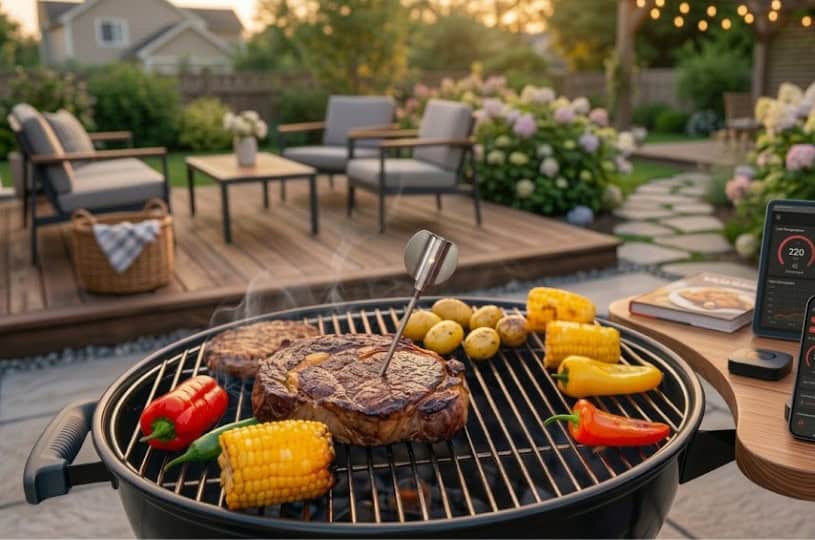
Part 3. How to Use a Set-and-Forget Wireless Meat Thermometer
Using smart wireless meat thermometers requires a fresh approach to preparing food. Proper technique ensures you get the absolute best results from your new hardware. Therefore, learning how to place the probe, manage the heat, and rest the meat will quickly elevate your barbecue skills.
Strategic Probe Insertion
Where you place the probe determines your entire success. The sensor must sit right in the coolest, thickest part of the meat. This guarantees safe and accurate reading.
- Find the thickest spot: For flat steaks or chops, insert the probe horizontally through the side. For large roasts, push it directly into the center of the top.
- Avoid all bones: Bones heat up much faster than muscle tissue. If the sensor comes into contact with a bone, it sends a false high reading. Consequently, you might pull the meat early and serve raw food.
- Avoid thick fat: Fat melts and heats differently than solid meat, which also messes up your temperature data.
- Push past the line: Always insert the probe past the safety notch line. This simple step uses cold meat to protect the delicate internal battery from the grill’s extreme heat.
Probe Placement by Meat Type
- Brisket: Insert horizontally into the flat (thinner) section, aiming for the center mass, avoiding the thick fat capPork shoulder: Push straight into the thickest area above the bone, keeping the tip at least 1 inch from any bone surfaceWhole chicken or turkey: Insert into the deepest part of the breast; a second probe in the thigh gives a complete pictureRibs: Probes work poorly in thin rib meat — use an instant-read thermometer for spot checks instead
Setting and Monitoring Internal Temperature
Preparation begins before the meat ever hits the grates. First, open your smartphone app and select your protein type. Then, choose your desired doneness level. The app automatically sets your perfect target internal temperature, such as 203°F (95°C) for a fall-apart brisket or 135°F (57°C) for a medium-rare steak.
Next, you must set your ambient heat limits. Smoking meat requires steady, low heat. Set a low alarm for 200°F (93°C) and a high alarm for 275°F (135°C). If your fire starts to die, your phone alerts you immediately. If grease catches fire, you will know instantly.
Furthermore, watch the cooking graph on your screen closely. When smoking large cuts like brisket, you will hit “the stall.” This frustrating stall happens around 160°F (71°C). Evaporating moisture cools the meat, keeping its internal temperature low for hours. The graph clearly shows the stall. After that, you can confidently wrap the meat in butcher paper to expedite the process.
The Right Time to Pull the Meat
Carryover cooking affects your pull time, depending on your heat level. For high-heat grilling, intense heat pushes inward after you remove it from the fire, raising the temp by 5°F to 10°F. Therefore, pull a medium-rare steak at 130°F. However, for low-and-slow smoking, carryover cooking is minimal. You typically pull these massive roasts right at your target of 200°F–205°F.
Carryover cooking explanation changes everything about timing. Due to thermal momentum, heat continues transferring from the outer layers to the center after removing the meat from the grill. The outside crust is much hotter than the inside core. Once you remove the food from the fire, the intense heat from the outside continues to move inward. Because of this, the internal temperature will rise another 5°F to 10°F while it sits on your counter.
As a rule, pull smaller steaks off 5 degrees early. Pull large roasts off 10 degrees early. Fortunately, smart apps use live data to predict this shift for you. They alert you precisely when to remove the food. To see this technology in action, watch the secrets of the Cook Estimator within the ProTemp Plus app.
Resting and Slicing Like a Pro
Resting is just as vital as cooking. While on the grill, intense heat violently pushes natural juices straight to the center of the meat. If you slice it right away, those delicious juices flood your cutting board. Consequently, the meat tastes terribly dry.
Instead, place the cooked meat on a cool cutting board. Let small steaks rest for 5 to 10 minutes. For massive roasts like a full brisket or pork butt, wrap them and let them rest in an insulated cooler (a faux Cambro) for 2 to 4 hours. As the meat slowly cools to around 140°F, the tight muscle fibers fully relax and reabsorb all the rendered fat and juices.
If preserving a crispy BBQ bark is your top priority, avoid resting the meat wrapped tightly in aluminum foil, as it traps wet steam. Instead, use unwaxed pink butcher paper. It lets the meat breathe while still retaining enough heat for a proper rest. Cutting across the muscle fibers shortens them. This simple knife trick makes every single bite significantly more tender. For more expert techniques, read these pro tips for using a smoker thermometer.
Part 4. Common Mistakes
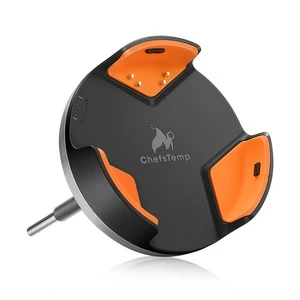
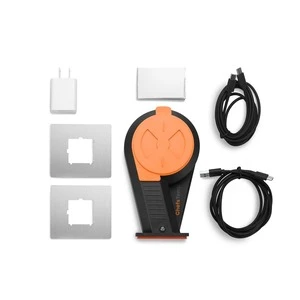
The barbecue market is packed with basic cooking gadgets. However, true innovation quickly stands out. The ChefsTemp ProTemp series easily solves the most common complaints pitmasters have with older wireless models. It upgrades your entire cooking process from start to finish.
Here is what makes this specific tool so completely different:
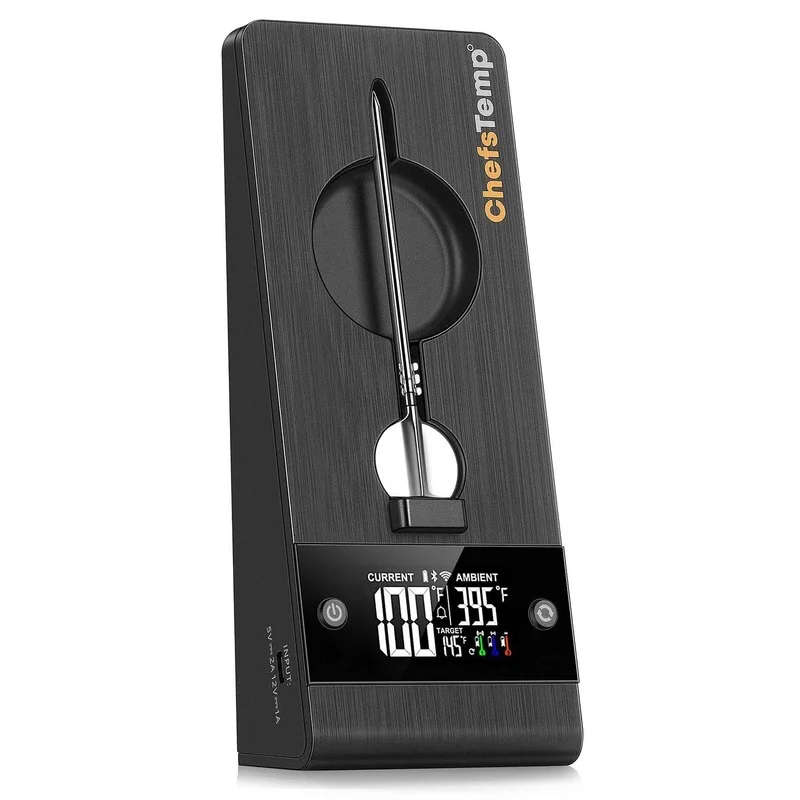
- Ultra-Thin Design: The ProTemp 2 Plus – Needle Probe Wireless Meat Thermometer features the absolute thinnest probe available today. Standard thick probes tear large holes in your food and let precious juices escape. Instead, this tiny needle preserves the firm structure of delicate fish and keeps chicken breasts incredibly juicy.
- Unlimited Wi-Fi Range: The connection power truly leads the industry. Traditional Bluetooth devices often fail the second you walk inside your house. Fortunately, this device uses a powerful Wi-Fi charging hub. It connects directly to your home internet. As a result, you can easily monitor long brisket smoke from your office desk or the local store.
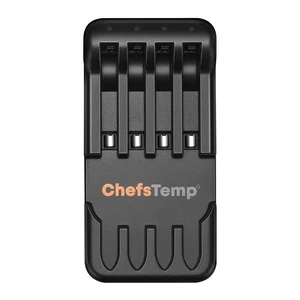
- Massive Battery Life: Power is never a problem. A single charge provides the probe with up to 40 hours of life. You can cook the biggest cuts of meat without ever worrying about a dead device. Furthermore, the base hub holds enough backup power to recharge the probe dozens of times.
- Smart App Tracking: The companion app does all the hard math for you. It features an advanced Cook Estimator. This smart tool tracks the rising heat and predicts your exact finish time. It also tracks the ambient air right next to your food. Finally, it alerts you five minutes early to account for carryover cooking.
Ultimately, this brilliant design gives you total control over your fire. To learn more about this amazing system, explore the ChefsTemp ProTemp set-and-forget technology today.
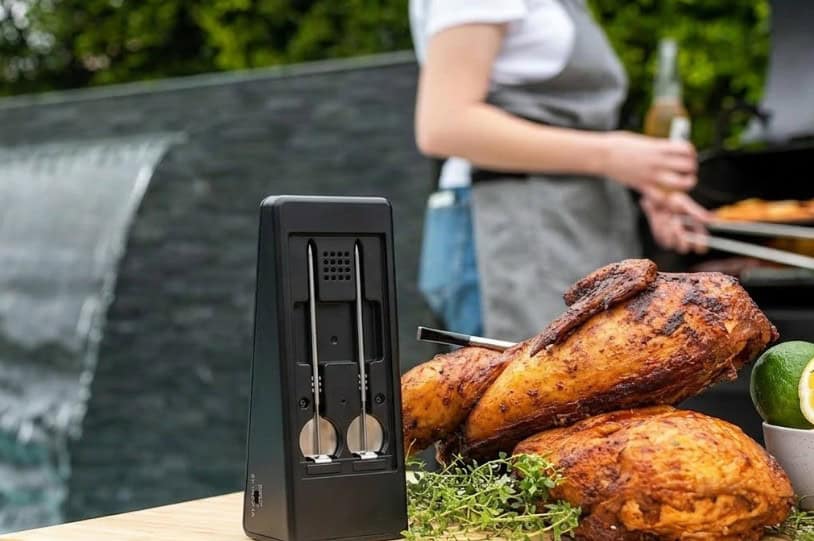
Part 5. Best Wireless Meat Thermometers Compared
Several wireless meat thermometers are available on the market, but they differ significantly in probe design, connectivity, and battery performance.
Here is what makes the ProTemp 2 Plus – Needle Probe Wireless Meat Thermometer so completely different:
| Feature | MEATER Plus | ThermoWorks Signals | Inkbird IBT-4XS | ChefsTemp ProTemp 2 Plus |
| Connectivity | Bluetooth + Wi-Fi repeater (via app) | Wi-Fi + Bluetooth | Bluetooth only | Wi-Fi (dedicated base station) |
| Effective Range | ~165 ft (Bluetooth); unlimited via cloud repeater | Unlimited (via Wi-Fi hub) | ~150 ft | Unlimited (via home Wi-Fi) |
| Accuracy | ±1°F internal | ±0.7°F–0.9°F (best-in-class) | ±2°F–3°F (budget-grade) | ±1°F |
| Probe Design | Single, fully wireless; no external wires | Wired probes to hub (up to 4 channels) | Wired probes to transmitter (4 channels) | Ultra-thin needle; fully wireless |
| Number of Probes | 1 (sold separately for multi-probe) | Up to 4 simultaneous | Up to 4 simultaneous | Up to 2 simultaneous |
| Battery Life | ~24 hours | ~72 hours (AAA batteries) | ~60 hours | ~40 hours |
| Ambient Temp Sensor | Yes (built into probe handle) | Yes (dedicated probe) | No | Yes (built into probe handle) |
| Cook Prediction / Smart App | Yes, guided cook estimates, rest timer | No, temperature graphs and alarms only | No, basic alerts only | Yes, predictive Cook Estimator algorithm |
| Works Through Steel Smoker Walls | Poor (Bluetooth base); better via cloud relay | Yes (via Wi-Fi hub) | Poor | Yes (via Wi-Fi base station) |
| Core Strength | Truly cable-free; elegant single-probe experience | Unmatched accuracy; rugged build; pro-grade reliability | Lowest cost entry point; solid basic monitoring |
Wi-Fi range + long battery + ultra-thin needle in one unit |
No single thermometer wins every category. The right choice depends entirely on your primary use case:
- If you need zero wires and cook one protein at a time, the MEATER Plus delivers the most frictionless experience, but budget for a second probe if you regularly cook multiple cuts simultaneously.
- If accuracy is non-negotiable (competition BBQ, catering, or restaurant prep), the ThermoWorks Signals’ ±0.7°F–0.9°F precision matches lab-grade instruments, and the price premium is justified for professionals.
- If you’re a beginner testing the category for the first time, the Inkbird IBT-4XS delivers functional temperature monitoring at a price where getting it wrong costs very little.
- If your core use case is overnight low-and-slow smoking at home, where Bluetooth signal loss through steel walls and dead batteries mid-cook are the two most common failure points, the ProTemp 2 Plus directly solves both with its Wi-Fi base station and 40-hour battery life. Its limitation is clear: leave it at home if you’re cooking off-grid.
Ultimately, this brilliant design gives you total control over your fire. To learn more about this amazing system, explore the ChefsTemp ProTemp set-and-forget wireless meat thermometer today.
Part 6. Conclusion
A set-and-forget BBQ thermometer is a must-have tool for outdoor cooking. It quickly removes the guesswork, stops dry meals, and lets you actually enjoy your party. By tracking the heat directly from your phone, you get restaurant-quality BBQ at home.
For most home pitmasters running overnight low-and-slow cooks, the ProTemp 2 Plus addresses the three most common failure points: Bluetooth signal loss through steel walls, short battery life during 12–16 hour smokes, and probe damage from thick insertion.
If you need camp or tailgate functionality without Wi-Fi, a Bluetooth model like the MEATER Plus is the more practical choice.
Part 7. FAQs about Wireless Meat Thermometer
Q: How do you use a meat thermometer for BBQ?
First, push the probe deep into the thickest part of your meat, avoiding bones. Next, pick your target heat on the smartphone app. Finally, put the food on the grill. The app beeps when dinner is ready.
Q: How accurate are wireless leave-in meat thermometer probes?
Premium models from brands like ThermoWorks and ChefsTemp achieve ±0.7°F–1°F accuracy. Budget Bluetooth probes under USD40 frequently exhibit ±5°F drift after extended heat exposure, which is sufficient to compromise food safety in poultry.
Q: What is the most reliable wireless meat thermometer for smoking?
For long smokes over 10 hours, Wi-Fi models with a base station, such as the ChefsTemp ProTemp 2 Plus or ThermoWorks Signals, consistently outperform Bluetooth-only probes due to stable cloud connectivity and multi-hour battery life. For short grilling sessions on a small patio, Bluetooth models offer sufficient range at a lower cost.
Q: How does a leave-in probe thermometer work?
A leave-in probe hides smart sensors inside a metal stick. The tip tracks the internal temperature of your meat. Meanwhile, the top handle checks the grill’s air temperature. It then sends this live data straight to your phone via Wi-Fi.
Q: Is a wireless meat thermometer worth it?
You need one if you smoke or barbecue meat. Beginners use the clever app to prevent burning meals. Skilled pitmasters use them to monitor overnight briskets. In the end, this gadget allows you to unwind with friends rather than staring at a scorching grill all the time.
Q: Can you leave a meat thermometer in the BBQ?
Yes, but only if it is a true leave-in probe. Basic instant-read models will quickly melt inside a grill. Modern wireless probes use tough ceramic and steel parts. This strong build safely handles hot BBQ temperatures up to 572°F.
Q: Do wireless meat probes work in a smoker?
Yes, they are actually the perfect tool for smoking meat. Because thick metal walls block weak Bluetooth, you should always choose a Wi-Fi model. The probe’s top sensor monitors low heat right next to your food, keeping the fire stable.