If you’ve never heard of raw meat diets, it may come as quite a shock to learn that there are people out there who consume raw meat on a regular basis. Perhaps you have enjoyed sushi and beef tartare on occasion, but have you eaten raw ground beef instead of a cooked burger and chicken sashimi instead of cooked chicken?
While the idea of a raw meat diet might seem a little prehistoric, there are people who believe that there are a lot of benefits of this diet—and not just for pets. In this easy-to-read guide to raw meat diets, we will answer some of the most common questions surrounding this unusual diet.
When you’ve finished reading, you will be able to make an informed decision on whether or not to try a raw meat diet. Without further ado, let’s get right into it.
Are Raw Meat Diets Common?
Raw meat diets or “primal diets” are diets that consist of raw or undercooked foods. A diet that has been around as early as paleolithic times, the raw meat diet has gained a bit of popularity in recent years from a select group of people who believe that it is beneficial to overall health. Not to be confused with the Raw Food Diet, which involves a diet based on uncooked fruits and vegetables, this diet is based on consuming the following:- Raw meats
- Raw seafood
- Raw eggs
Raw Meat Dishes
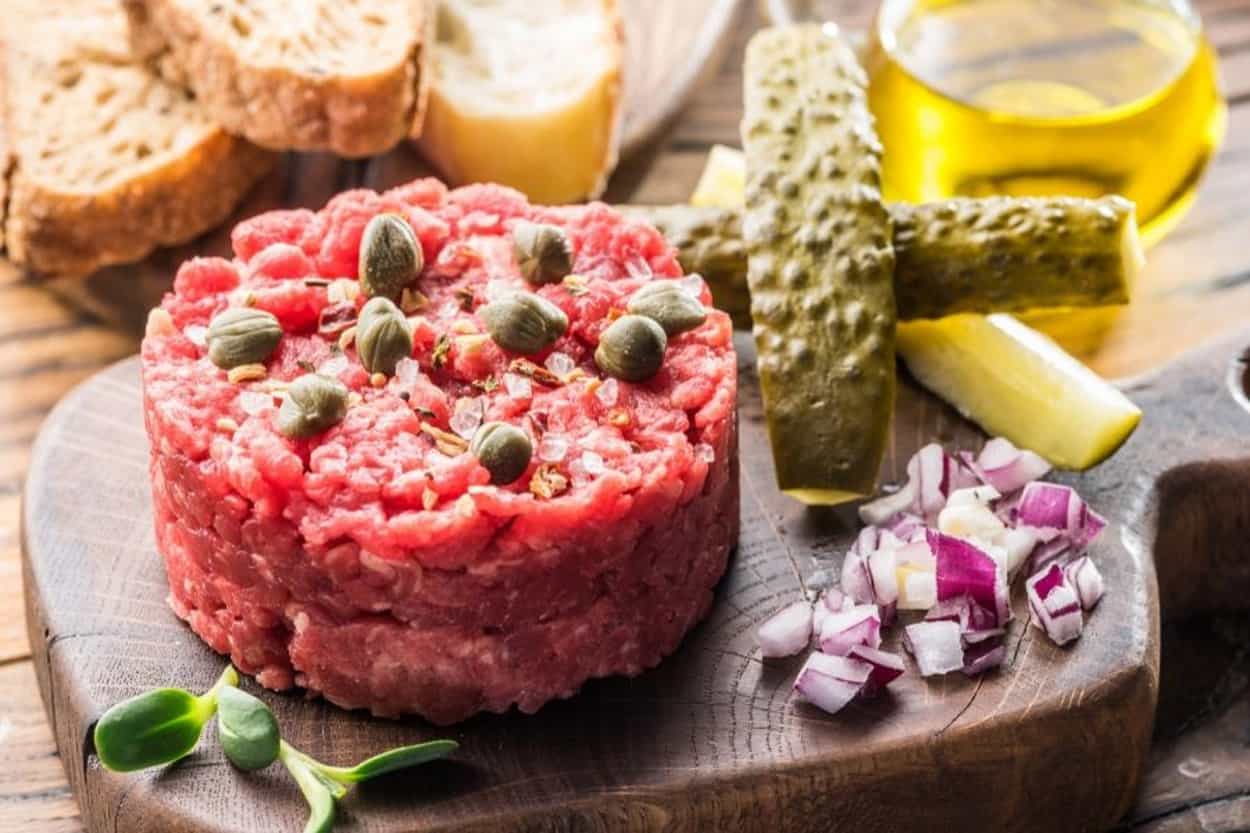
Think you’ve never eaten raw meat before? Think again. If you’ve ever enjoyed sushi, steak tartare, or beef carpaccio… you have most likely eaten raw meat! In the United States, raw meat is pretty taboo outside of well-known popular dishes like the ones mentioned above. However, in other parts of the world, raw meat dishes prevail as classic diet staples. Let’s briefly cover some of the most popular raw meat dishes from around the world. https://www.chefstemp.com/wp-content/uploads/2021/10/Chefstemp-Raw-Meat-Diets-03-1-400×267.jpg- Hangul: Korean raw ground beef with a raw egg on top
- Carne Cruda: An Italian dish featuring thinly-sliced beef steak
- Ossenworst: A raw ox sausage dish originating from Amsterdam
- Carpaccio: An Italian dish featuring some sort of raw meat such as beef or fish
- Torisashi: A popular Japanese dish made from thinly-sliced raw chicken
Risks of Eating and Preparing Raw Meats
You have most likely heard that eating raw or undercooked foods increases your risk of foodborne illness, but what exactly does that mean? There are very real risks involved in consuming raw meat, including the ways in which you handle them. Have you ever seen someone wash their meat before cooking it in an effort to clean it? Not only is this an ineffective way of cleaning your meat, but it also increases the risk of spreading harmful germs throughout your kitchen. Raw meat can contain harmful pathogens and bacteria like Salmonella, Listeria, and E. coli. Proponents of raw meat diets will tell you there are a few tricks to reducing the risk of bacteria, like freezing the meat first and purchasing only high quality meat. However, the only true way to eliminate the risk of illness is to thoroughly cook meat to its recommended safe internal temperature. We recommend keeping a quality meat thermometer at home to ensure that your meat is properly cooked.Raw Meat Bacteria
As previously stated, raw meat often contains harmful germs and bacteria. That is why proper food preparation is so important—it reduces your chances of foodborne illness. Each type of raw meat comes with the risk of contracting a different germ. Common meats and their bacteria include: https://www.chefstemp.com/wp-content/uploads/2021/10/Chefstemp-Raw-Meat-Diets-02-400×267.jpg- Raw chicken commonly contains Salmonella that needs to be cooked out
- Beef or pork may contain E. Coli if not thoroughly cooked
- Fish or sushi may contain the parasite Anisakiasis